Nevlunghavn


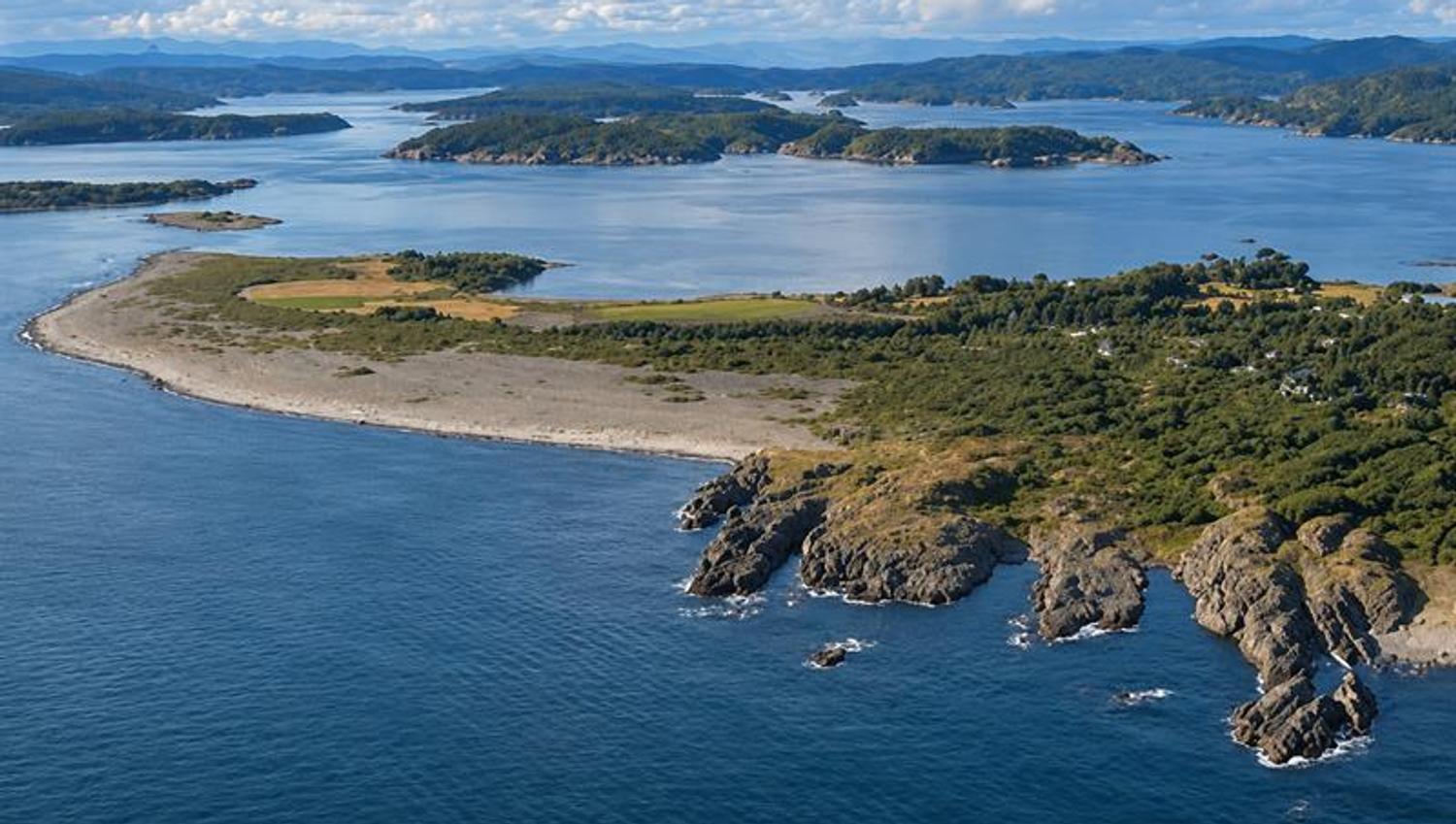
Explore the pebble beach, ancient burial cairns and open sea views at Mølen near Larvik.
Mølen lies on the Brunlanes coast, between Nevlunghavn and Helgeroa in Larvik Municipality. Its long pebble beach forms part of the Ra glacial moraine, created during the last Ice Age. Among the stones are large burial cairns and other archaeological remains that tell the story of people who lived along this coast long ago. Follow the paths through the open coastal landscape, discover rocks brought here from across southeastern Norway and enjoy the views over the sea. Mølen is part of Gea Norvegica UNESCO Global Geopark and can be visited throughout the year.
Discover a coast shaped by ice and sea
The pebbles are the first thing you notice at Mølen. Some are almost white, others dark or patterned, and all have been shaped by the movement of ice and water over thousands of years. Around 13,000 years ago, the edge of a large glacier stood in this area. Meltwater carried sand, gravel and stones towards the sea, depositing material along the ice margin and creating a terminal moraine. As the ice retreated, the land gradually rose. Waves washed away finer sediments and rounded the exposed stones, forming the pebble beach you see today.
Look out for the distinct terraces in the landscape. They mark former shorelines and show how the coast has changed over time.
Read the landscape in its rocks
Ice and meltwater transported rocks to Mølen from different parts of southeastern Norway.
Larvikite is particularly common, alongside rhomb porphyry, syenite and other rocks with varied colours and patterns. Geological displays along the path from the car park explain where the stones came from and how the landscape was formed. Take your time to look closely and photograph them, but leave every stone in place. The pebble beach is protected.
Explore the ancient burial cairns
Mølen is home to a remarkable archaeological landscape with large burial cairns overlooking the sea. The largest cairns measure up to 35 metres across, while the tallest rises approximately five metres. Those situated highest in the landscape may be as much as 3,500 years old. Archaeological finds also confirm burial activity during the Iron Age. One burial monument has a distinctive ship-shaped outline approximately 20 metres long. Archaeologists found around 70 boat rivets and ash dated to the period shortly after the beginning of the first millennium AD. We do not know exactly who was buried at Mølen, but the monuments show that this stretch of coastline held great significance for people in the past.
The mystery of the smaller stone piles
Between the large cairns lie almost 200 smaller stone piles arranged in seven long rows.
These have traditionally been regarded as part of the burial ground. Researchers have also suggested another possibility: they may have supported poles holding nets used to catch migrating birds. Their original purpose has not been conclusively established. Please leave these stone piles undisturbed, just like the larger burial monuments.
Bring your binoculars
Mølen is an important stopping point for birds migrating along the coast, especially in spring and autumn. On busy migration days, you may see birds passing over the pebble beach or resting offshore. The surrounding sea is also an important winter habitat for waterbirds.
Bring binoculars and observe from a distance without disturbing the wildlife. Mølen also has a bird observatory involved in monitoring migration and bird ringing.
Follow the coastal trail from Nevlunghavn
You can walk to Mølen from Nevlunghavn, following the coastal trail for approximately three kilometres. The route passes varied coastal scenery before opening onto the pebble beach and wide sea views. You can also approach from Helgeroa or choose a shorter walk from Mølen's own car park. From there, follow the path past the information displays towards the shore and archaeological site. For more walking ideas, see the coastal trails of Vestfold.
Experience Mølen throughout the year
Mølen has a different character in every season. On calm days, you can explore the paths and study the stones. When the wind picks up, the exposed nature of this coastline becomes clear. The area is accessible throughout the year, but take particular care during rough weather. Stay well back from the water when waves are high and wear shoes with good grip. Loose pebbles can be tiring and difficult to walk on, and the terrain is not suitable for everyone.
Help protect Mølen
Mølen is a protected natural and archaeological site. Its stones and burial monuments are an important part of the landscape and must be left undisturbed. Do not remove stones, move stones from the cairns or build new cairns or stone piles. Open fires are prohibited, and disposable barbecues should not be used. Respect the birdlife, keep your dog under control and follow current leash regulations. Please take all litter home so future visitors can enjoy the same landscape.
Source: Visit Larvik