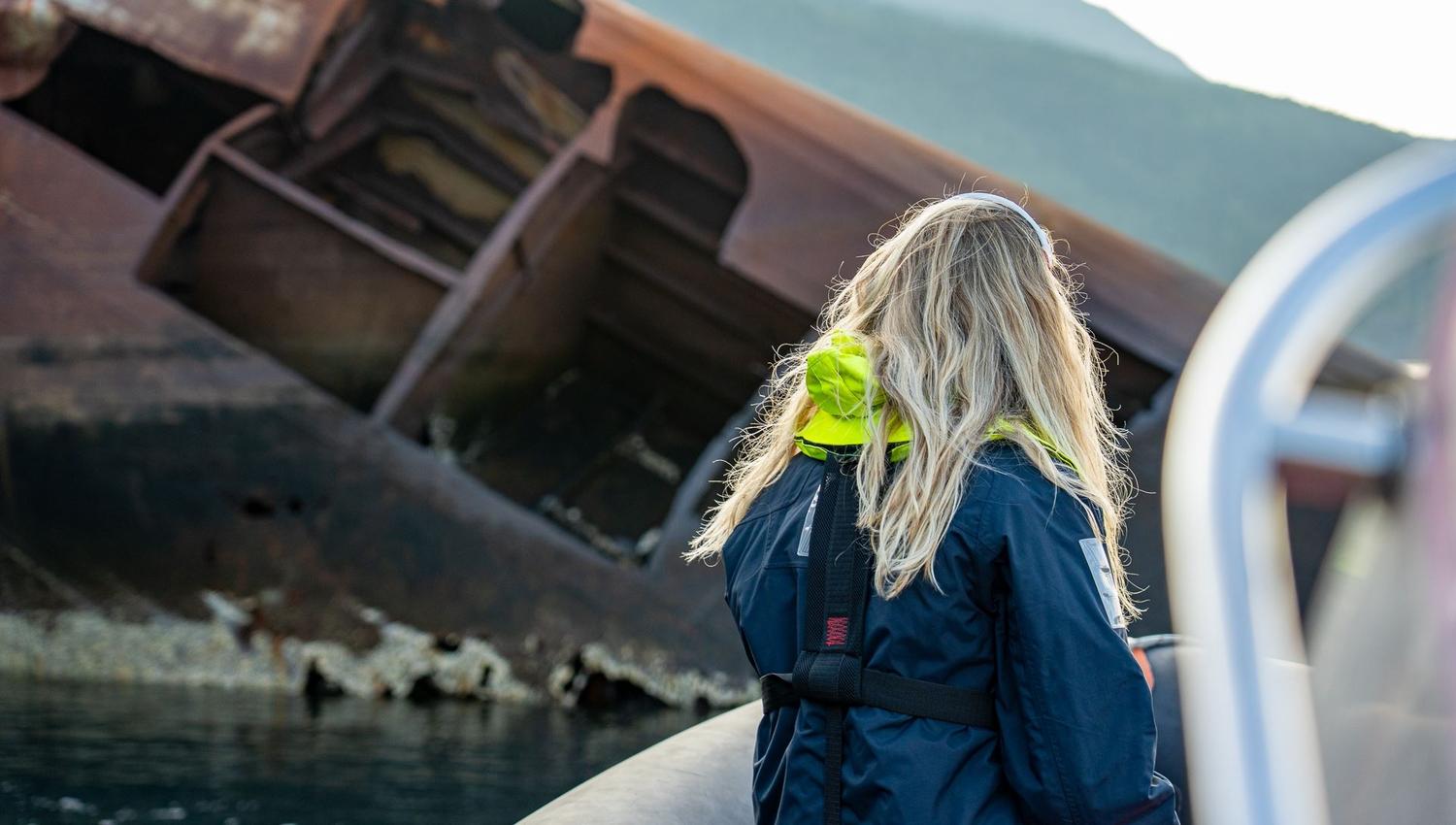
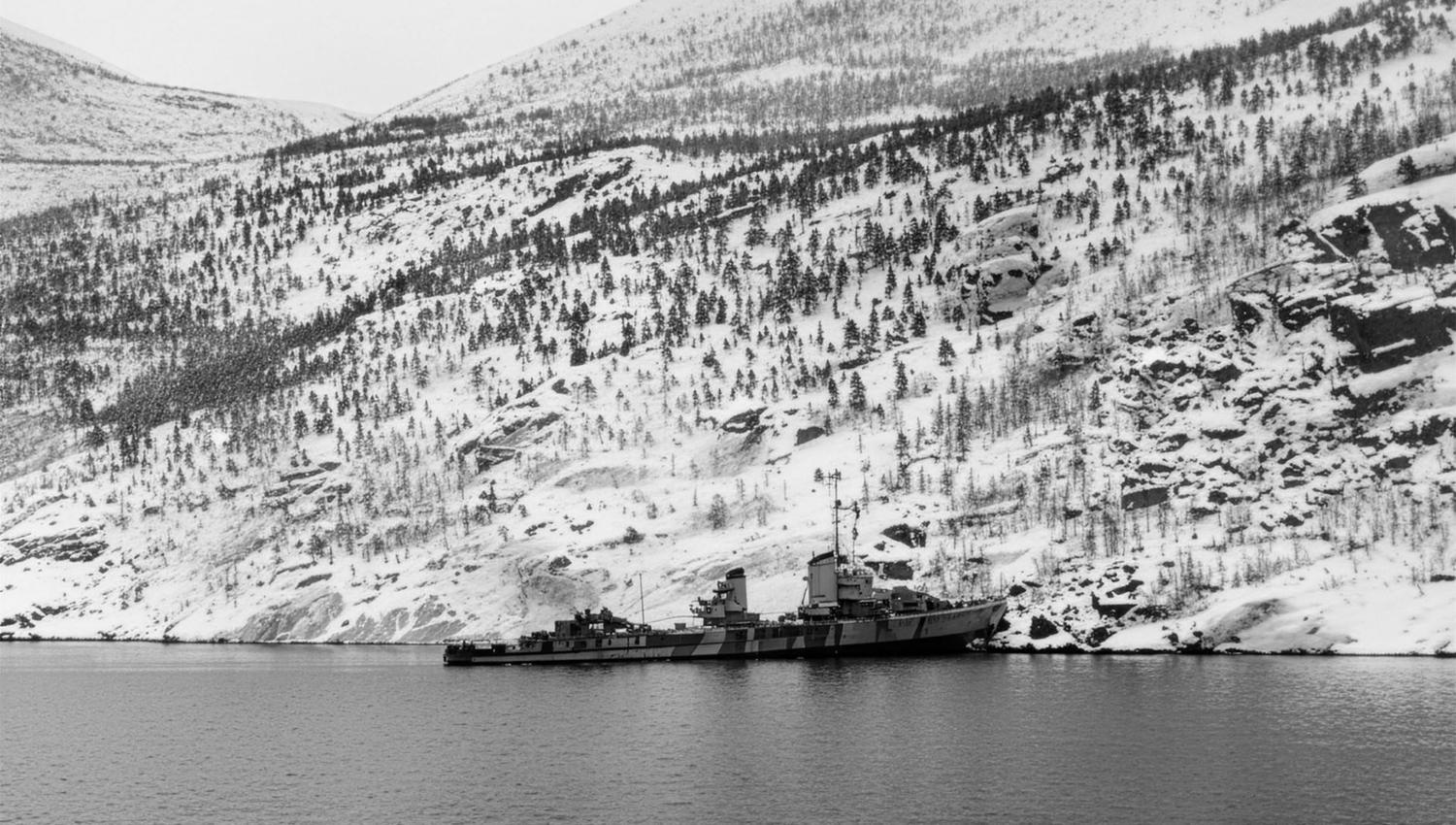
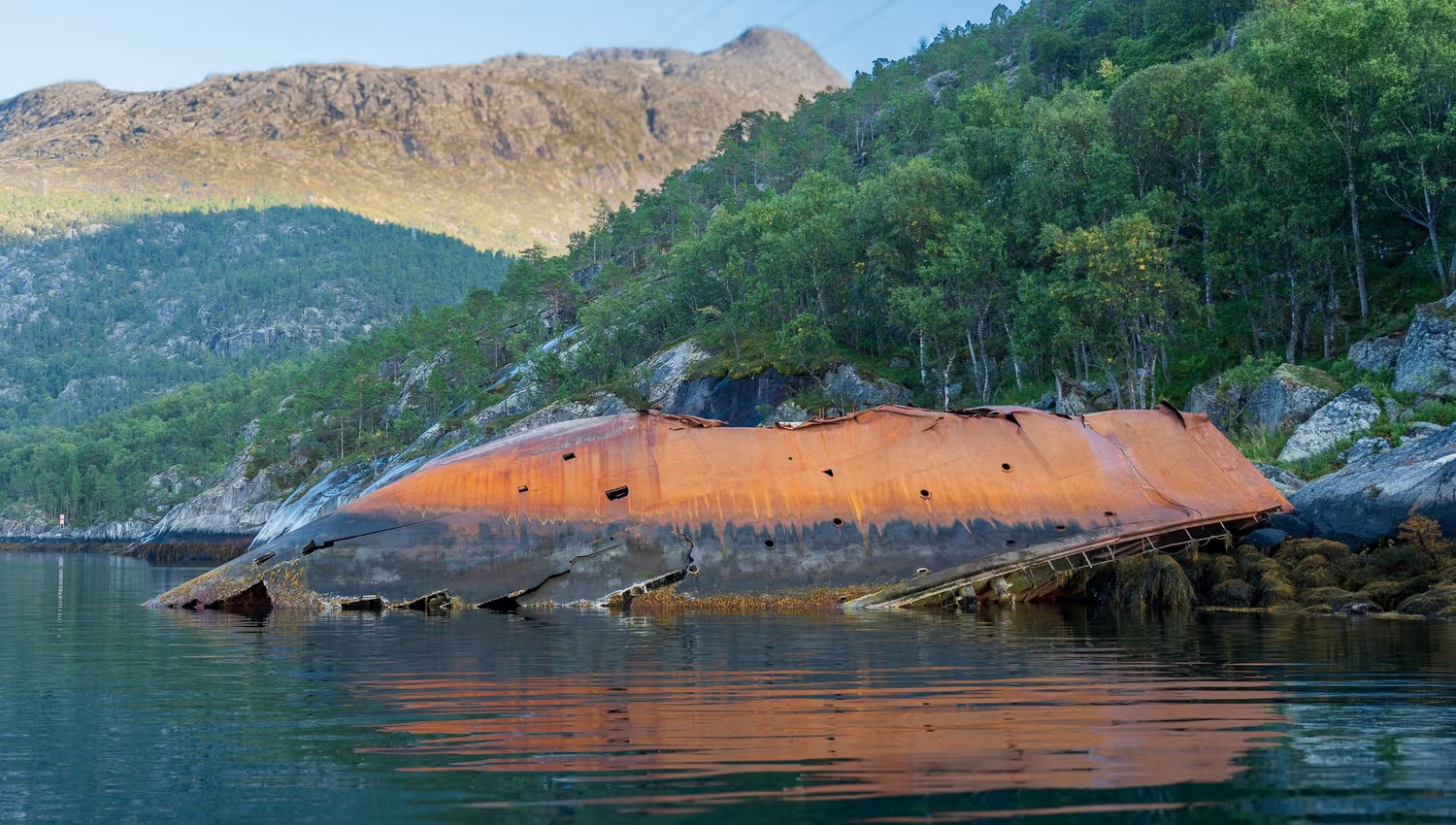
The shipwreck Z2 Georg Thiele is located at Sildvik in the Rombaksfjord, with the bow visible on land. Here you get close to a physical trace of the violent naval battles around Narvik in April 1940.
Z2 Georg Thiele is one of the clearest war memorials in the Narvik region. The wreck is located at Sildvik in the Rombaksfjord, where the bow of the ship can still be seen on the shore. For guests who want to experience Narvik's war history, this is a close and raw encounter with history.
The ship was a German destroyer of the Type 1934 class. It was launched in 1935 and put into service in 1937. As built, the ship was 119 meters long, 11.3 meters wide and had a crew of 325 people. During the Second Naval Battle of Narvik on 13 April 1940, Z2 Georg Thiele was badly damaged by British fire and washed ashore so that the crew could abandon the ship. Later, the ship broke up. The wreck is today known as a diving destination, but here you can also experience parts of the history from land.
The wreck makes history concrete. Here you see not only a name in the history books, but the remains of a vessel that was part of the battles for Narvik, the ore harbor and control of the fjords. The narrow fjords, steep mountainsides and demanding conditions made the fighting intense, and the landscape around Narvik still bears traces of what happened.
The trip to the wreck goes from the area by Sildvik power station. This is not a facilitated attraction with facilities, but a historical landmark in the terrain. The experience requires you to follow the right path, show respect for the place and stay away from the wreck itself.
Accessibility information
- Wheelchair accessible
How to get there
From the parking lot at the barrier, follow the construction road inwards towards Sildvik power station. You pass three buildings on the left side. At the fourth building on the left side, the path starts parallel to a fence that goes up towards the mountain.
Follow the path up and around the fence. Just after you have rounded the fence, the path splits in two. Take the upper path and keep the elevation in the terrain before the path descends to the shipwreck. Do not take the lower path along the sea.
Source: Visit Narvik AS