There is much more to the legacy of Norsemen than conquest and pillage. Meet two present-day Vikings who aren’t just fascinated by the Viking culture – they're even living it.
Written by Mikael Lunde
There is much more to the legacy of Norsemen than conquest and pillage. Meet two present-day Vikings who aren’t just fascinated by the Viking culture – they're even living it.
Written by Mikael Lunde
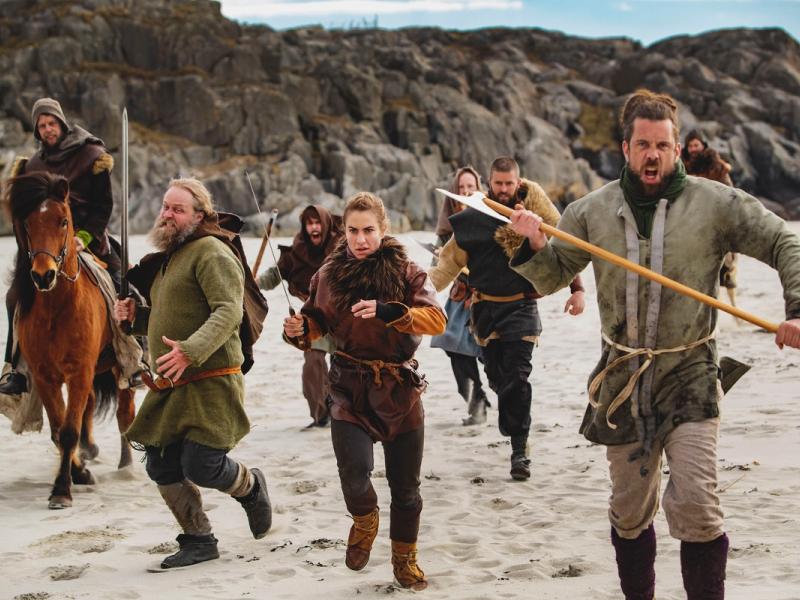
The Vikings were legendary warriors. Their famously fast and light ships could be pulled ashore, which meant that the Vikings did not need harbours. This made Viking raids sudden, unpredictable, and nearly impossible to defend against. Starting with the raid on the British monastery at Lindisfarne in AD 793 and continuing for more than 200 years, the hardy Norsemen left their mark on history.
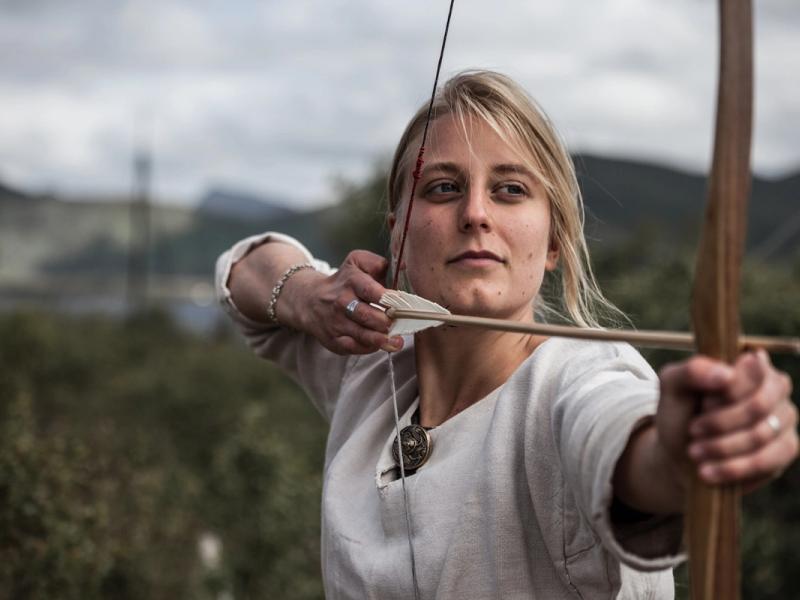
But there is a lot more to the Viking culture than plunder and violence. In the old Viking country on the west coast of Norway, there are people today who live by their forebears’ values, albeit the more positive ones.
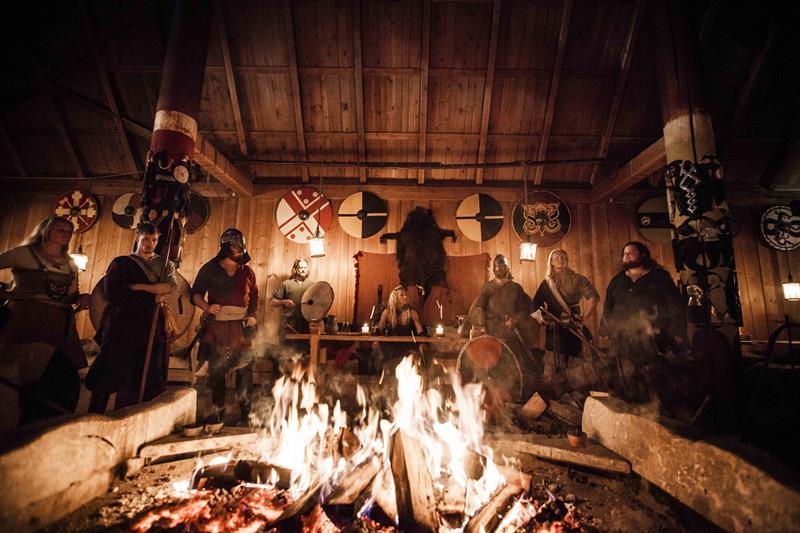
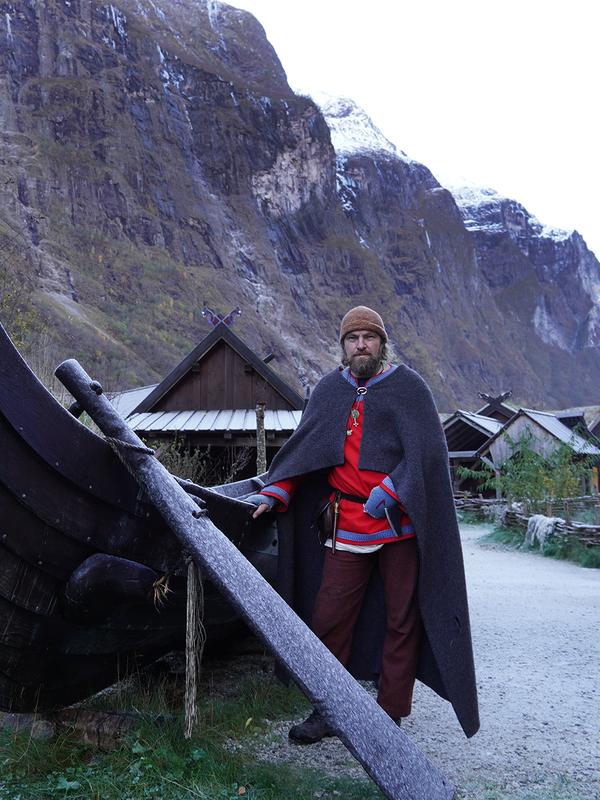
Thousands of Norwegians are now working to rediscover valuable, forgotten parts of their Viking heritage. Hundreds gather at Viking markets in Gudvangen and Avaldsnes – the historic home of famed King Harald Fairhair – to re-enact Viking life and learn Viking Age crafts and trades. At Gudvangen, the Vikings have an undisputed king: Georg Olafr Reydarson Hansen. For almost 20 years, he worked to establish the permanent Viking village Njardarheimr, which finally opened in 2017.
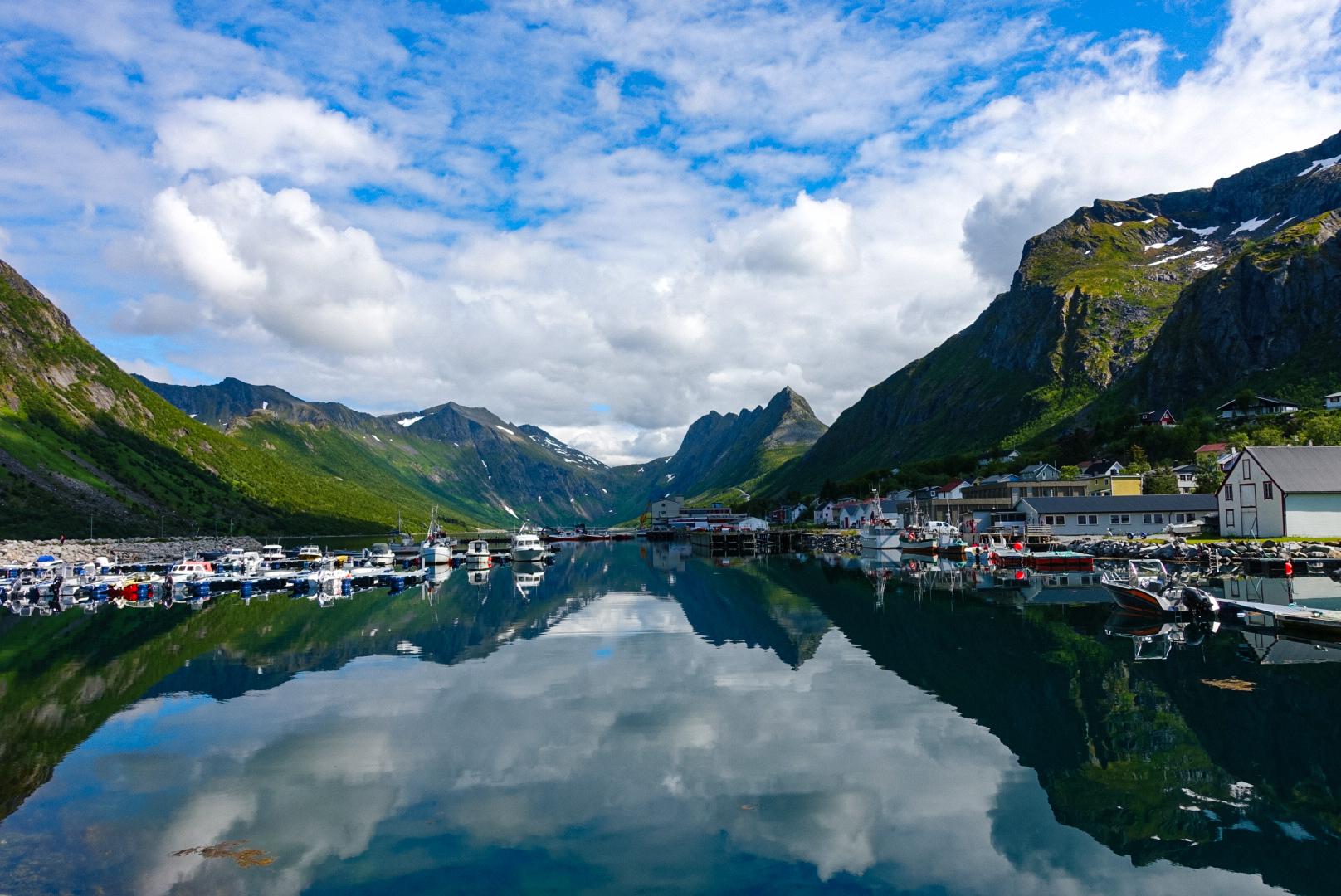
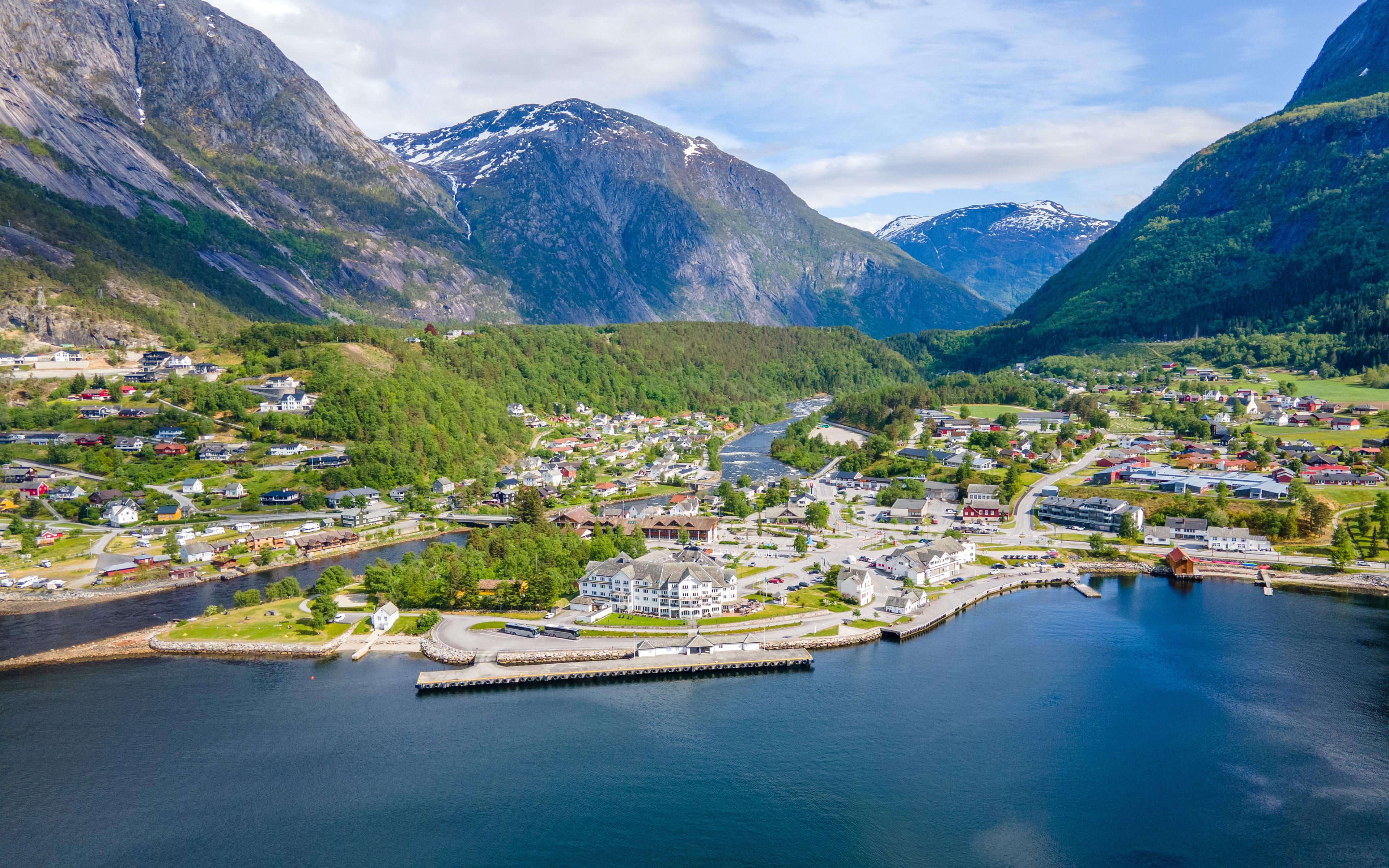
The village is built to scale at a stunning location in the innermost part of beautiful Nærøyfjord. “It’s authentic in style and built by traditional methods. A total of 18 buildings have been erected here, and several hundred litres of tar, linseed oil, and ox blood have been used. The chieftain’s hall is painted green, which was the costliest pigment one could obtain back then,” says town king Hansen. According to him, there are about 40 Viking re-enactment groups in Norway, with active participants numbering somewhere between 2,000 and 4,000. Internationally, there are ten times as many.
“We have 400 Vikings in Gudvangen. At the market, we have kids learning traditional crafts and trades. A 15-year-old boy is becoming a blacksmith and a 15-year-old girl is learning textiles. When the older generation sees this, they think it’s great, and they join in,” explains Hansen, combing his beard with an authentic Viking comb that he carried around at the hip.
In addition to the comb, the cape, and the clothes, he shows us an authentic sword. “It’s made from thousands of pieces of steel, folded over and over again until becoming extremely strong and sharp,” he says. Of the 3,500 Viking swords that have been found in Norway thus far, only about 50 are single-edged like his. For him, none of these Viking things are a gimmick. Far from it.
“When I put on Viking clothes, I’m not trying to be someone I’m not, but rather to emphasise who I already am,” he says. And it is not as if they reject the modern world. “We watch movies and TV, and heavy metal is the music of modern Vikings. The old and the new must go together,” says Hansen, adding: “We are people of a new age looking to the values of an older one.”
“When I put on Viking clothes, I’m not trying to be someone I’m not, but rather emphasise who I already am.”
Since childhood, the members of Norwegian “Viking metal” band Enslaved have been fascinated by Old Norse culture and mythology. In the early 90s, the band decided to merge Viking heritage with black metal. Delving into the material, guitarist Ivar Peersen encountered unexpected depths.
“A lot of people approach Viking culture through its militaristic aspects or violent drawings and Snorre’s kings’ sagas,” says guitarist Ivar Peersen.
“At some point, you realize that there’s a lot more to the mythology and history. It’s about philosophy as much as anything else,” he continues. “You start discovering the nuances and appreciating the things that are more … subtle. The beautiful things.”
It is a philosophy expressed through coastlines, forests and trees – glimpses of beauty are revealed, above all, in the Vikings’ relationship with nature. “If you want to explore the Viking identity, there are two places to do it: Iceland, and the Norwegian west coast. Here you’ll experience nature and see the symbolism which is the entire foundation of their culture,” says Peersen.
“At some point you realize that there’s a lot more to the mythology and history. It’s about a philosophy as much as anything else.”
So what values are they talking about? Peersen has an unlikely example – Ragnarok, the mythological “end of the Gods”, and the end of the world. “It has a lot to tell us about the experience of being human and about having to let some things go: to see them fade and die and then grow again, as the foundation of something entirely new.” That is how the Vikings saw both their own existence and life itself.
“In modern society, there’s a finality to all things. You start something, you stay the course, and when it comes to an end it is seen as a failure. Whilst in the Old Norse, the downfall and Ragnarok holds a completely different place. It is not final,” says Peersen. He is not seeking to teach reincarnation, but simply to explain a mindset. “It’s about how you approach certain things, like death. Focus too much on it, and you waste an incredible amount of life. With such a mindset, your focus will shift towards the present moment.”

Read more
See our selection of trusted companies that work hard to make you happy all through your trip.