In Oslo’s historic Frogner district lies the Vigeland Sculpture Park – the world’s largest sculpture park created by a single artist, and a place where stone and bronze tell a universal story about what is means to be human.
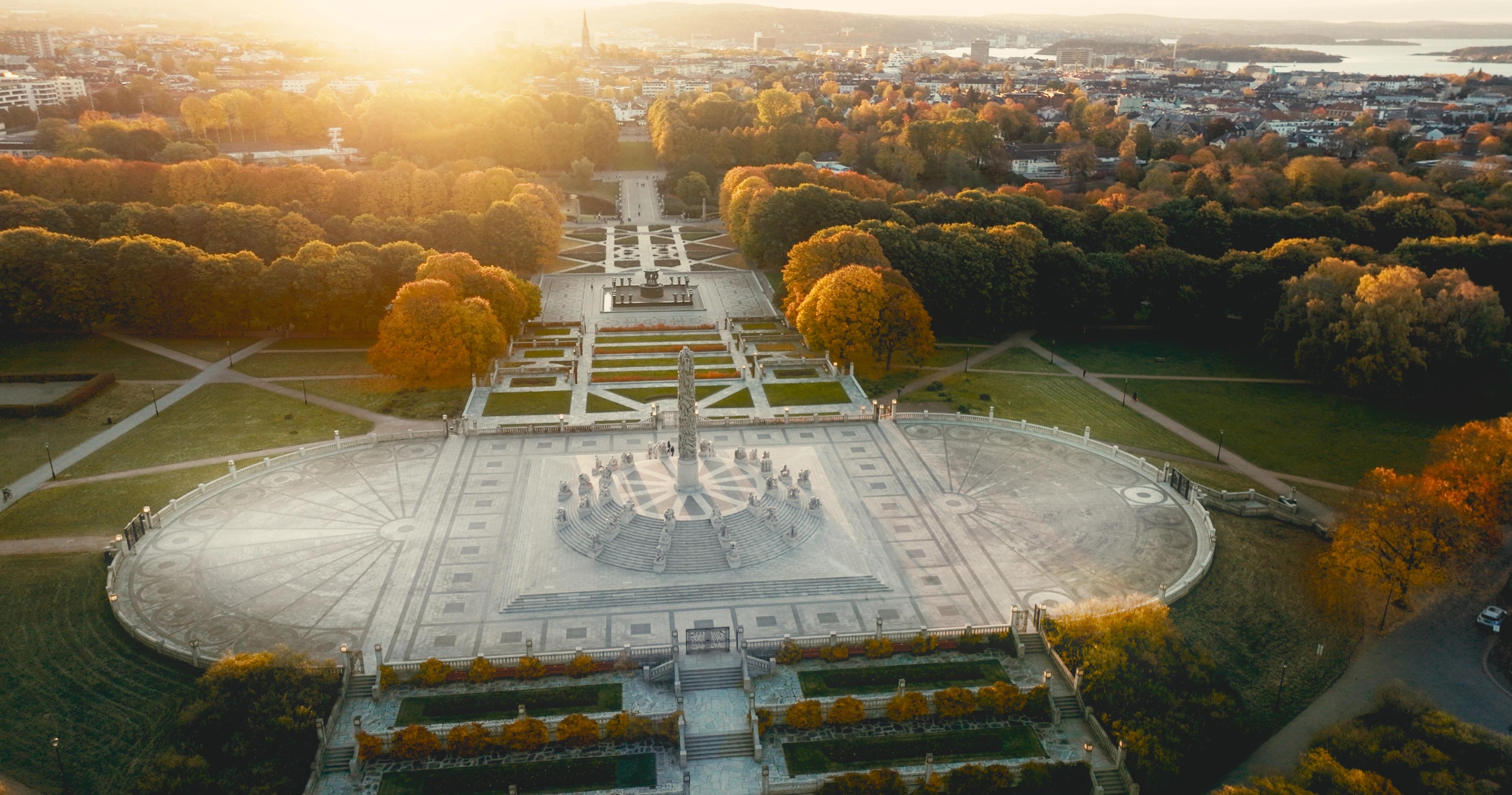
The mysteries of the Vigeland Sculpture Park
Life, from cradle to grave.
Love, loss and the struggle within.
Step inside the largest sculpture park in the world.
Children weave between the sculptures. A jogger passes. Life passes by.
The park is part of everyday Oslo life. And yet, it is anything but ordinary. The Vigeland Sculpture Park is the world’s largest sculpture park created by a single artist. Every pathway, every visual axis, every sculpture was designed by Gustav Vigeland.
How many sculptures are there? No one quite agrees. It depends on how they are counted – as individual figures or as sculptural groups. Either way, the number exceeds 200.
And just inside the gates, the man behind it all stands waiting.
Gustav Vigeland is the only clothed figure in the entire park. All other bodies are rendered naked, stripped of fashion, era and social markers, allowing them to appear timeless and universal.
The Vigeland Park is perhaps the place in Oslo where you gain the most from walking with a guide. With sculptures in every direction, it’s easy to miss the hidden lines and subtle details that tie it all together.
Our walk is guided by Marit Utaker of Oslo Guidebureau, who has worked as a licensed guide in Oslo for more than 30 years. She knows when to pause and where something small reveals something bigger.
Marit doesn’t offer definitive answers. She shares her interpretations while leaving space for others to form their own. Because this is not a park with just one story, but many.
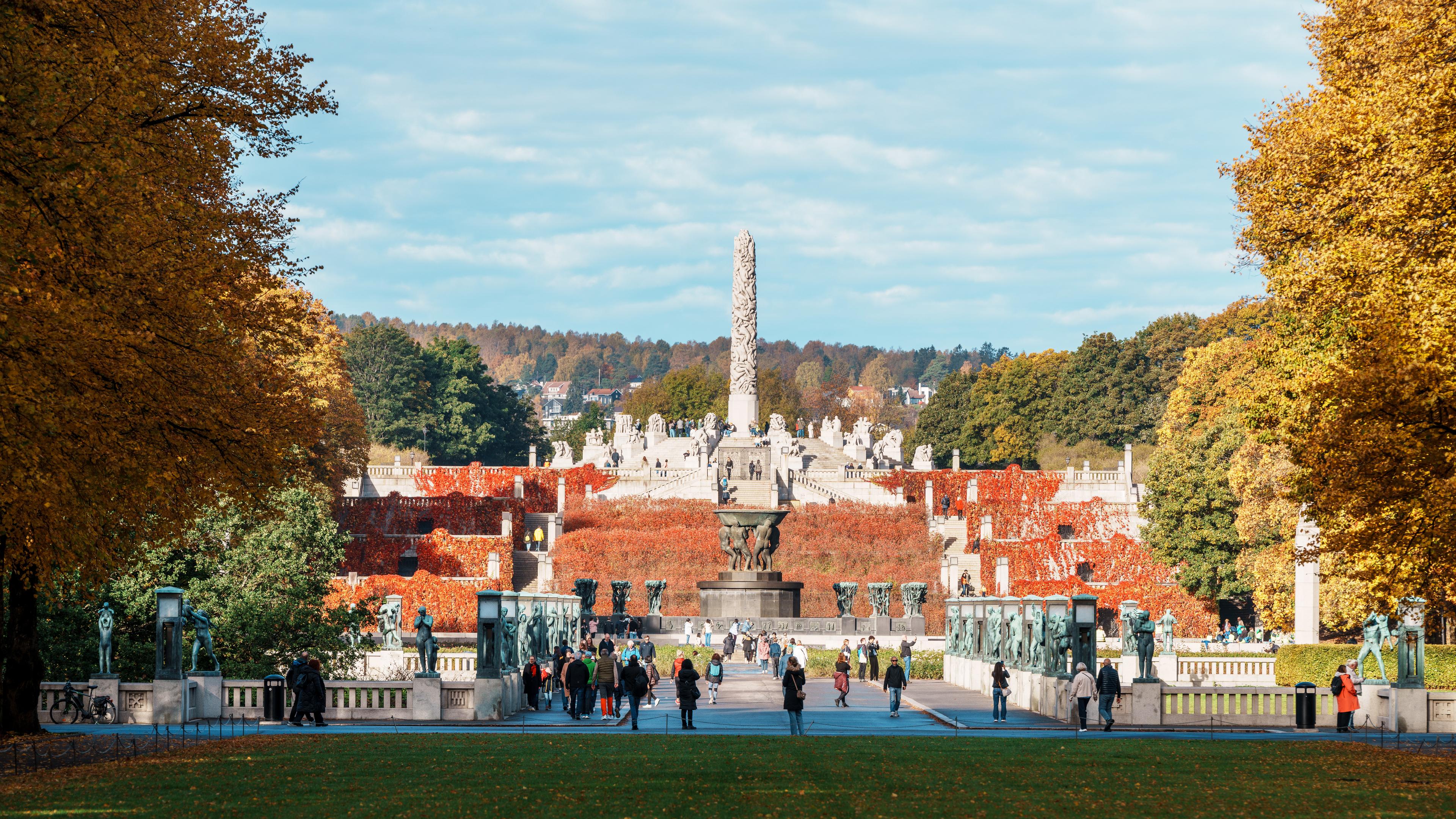
From the gates, the path leads straight onto The Bridge, a 100-metre-long granite structure lined with lanterns and 58 bronze sculptures.
The Bridge
"This park shows everyday life," Marit says, "and everyday situations."
Here, relationships take centre stage. Fathers carry children, children cling to fathers, bodies lean toward one another. Marit points out how unusual this was at the time: in European art, parenthood was more often shown as mother and child. On The Bridge, fathers are everywhere – playful, proud, protective, and sometimes struggling.
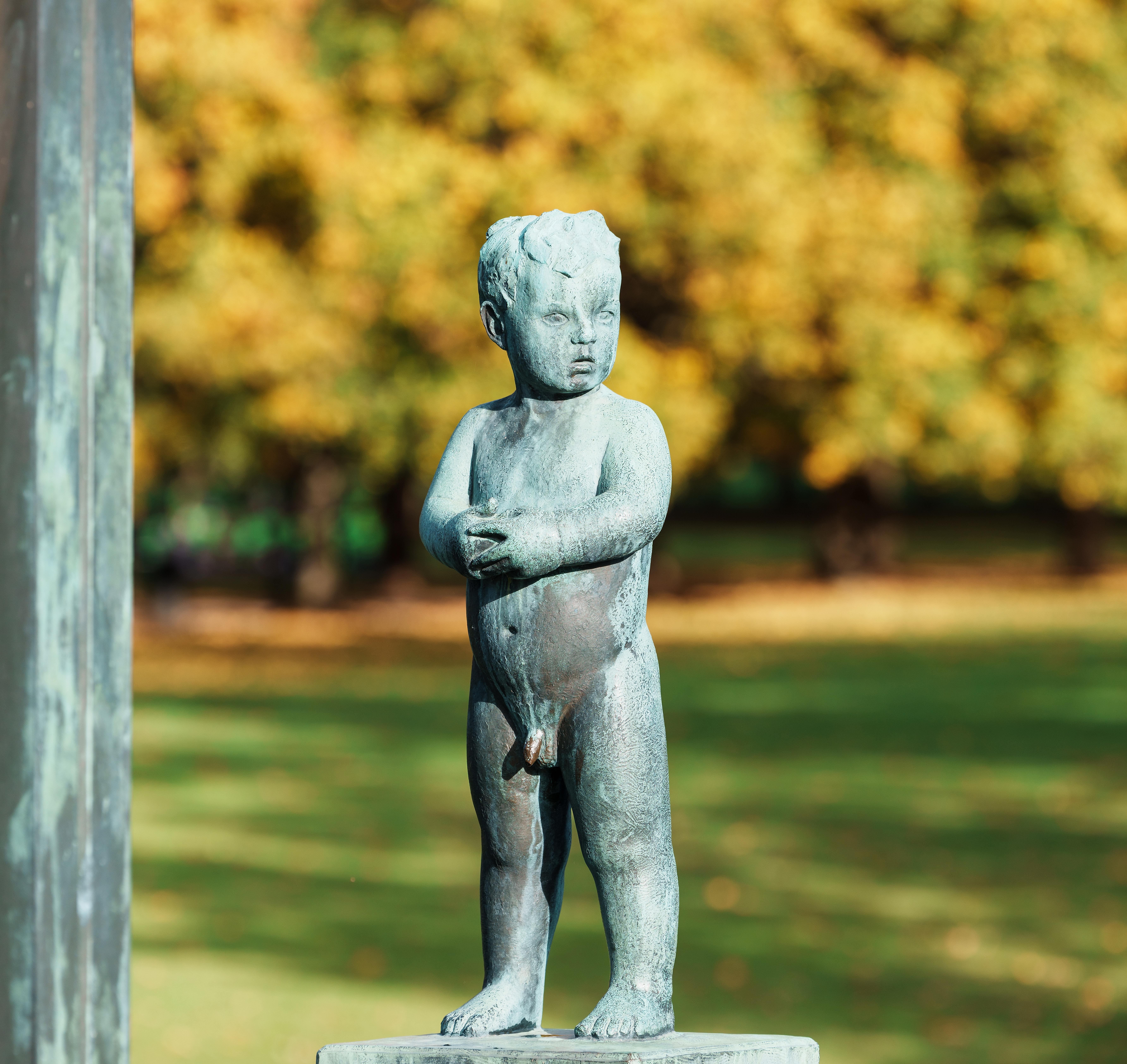
Among the children, stands one of the park’s most famous figures: The Angry Boy (Sinnataggen, in Norwegian). He often steals the spotlight, but Marit reminds us that he is just one of several children on the bridge. Around him are others laughing, sulking, thinking and observing – the full spectrum of emotions.
Over the years, the figure's hand has been worn smooth by visitors touching it for luck. It’s a quiet reminder that these sculptures are meant to be seen, not touched. Bronze may look solid, but thousands of hands slowly change the surface and the artwork itself.
See the man juggling babies? Look closer. Unlike the children on The Bridge, these are Vigeland’s “geniuses” – recurring symbols of imagination and life force.
The struggle against evil
Along the Bridge, granite sculptures introduce a darker theme. Humans wrestle with lizards, sometimes described as dragons, in four dramatic groups often referred to as The Struggle Against Evil. These scenes are commonly interpreted as symbols of humanity’s inner battles.
Some figures fight. One surrenders.
In Marit’s interpretation, this difference matters. She reads the surrendering woman as an expression of Vigeland’s idea that women were closer to nature and more able to understand it and live with it. Where the men struggle against the creatures, the women appear to accept them.
Other interpretations are, of course, equally valid.
And that is exactly the point.
Notice the contrast: one fights fiercely. The other looks almost as if she is smiling.
How this park became possible
The scale of the Vigeland Sculpture Park is extraordinary, and not incidental.
In the early 20th century, Norway was a young nation searching for cultural landmarks of its own. By then, Gustav Vigeland had established himself as one of the country’s leading sculptors, known for his monumental works and his uncompromising focus on the human figure.
In 1921, Vigeland entered into an unprecedented agreement with the City of Oslo. He donated all his future works in exchange for a studio, housing, funding, and complete artistic freedom.
This agreement made it possible to create not just individual sculptures, but an entire sculpted landscape.
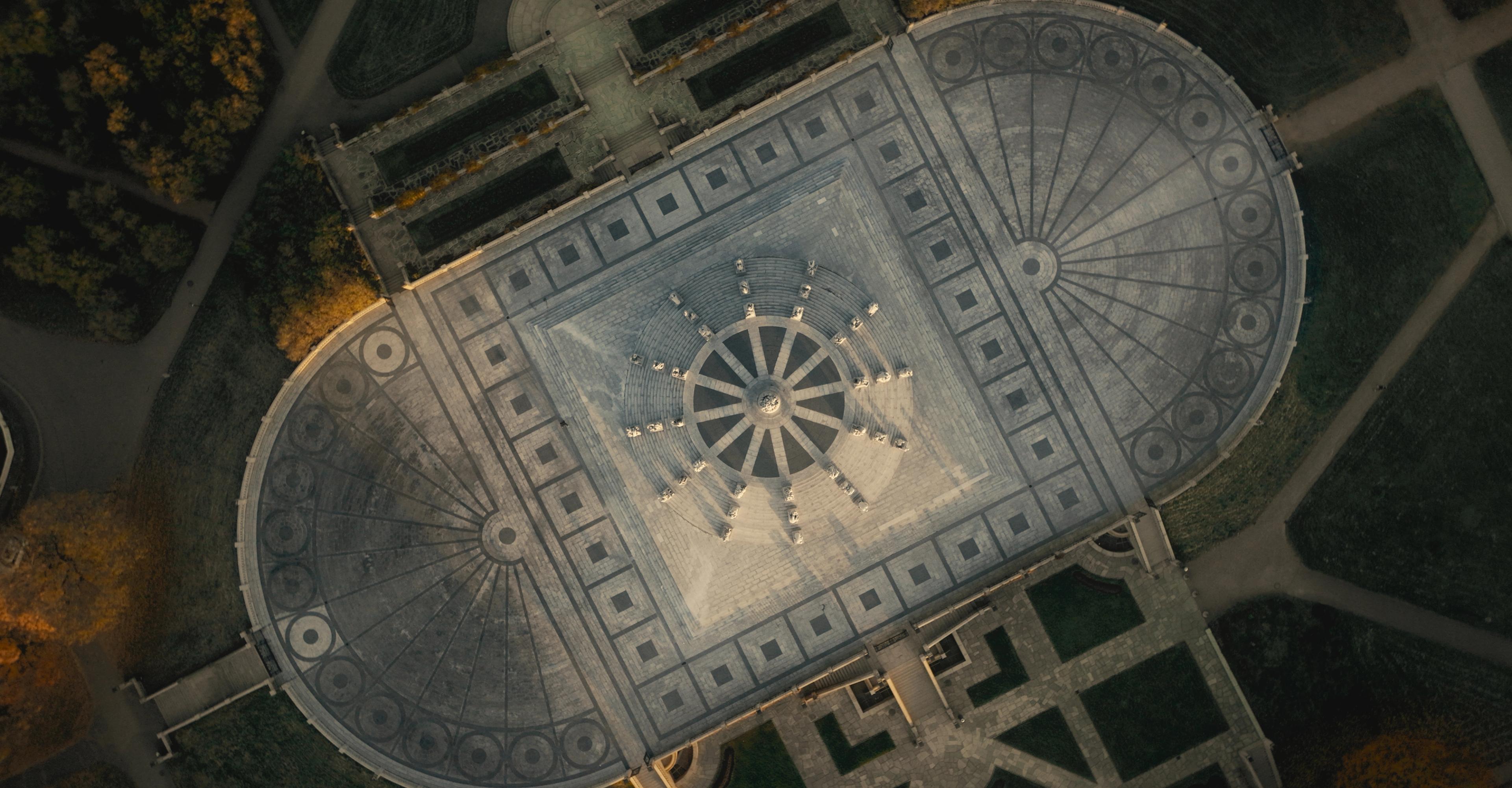
The Fountain and The Labyrinth
Beyond The Bridge, the park opens towards The Fountain, the piece that first set the entire project in motion.
At its centre, six men carry a vast bowl, often interpreted as the world itself. Water flows steadily beneath them. Around The Fountain, reliefs unfold in a continuous cycle of life: children at play, young couples, families, ageing bodies, grief, death, and then new life again.
"Everything is a cycle here," Marit says. "It never really ends."
Encircling The Fountain is Vigeland’s The Labyrinth.
Labyrinths have long been associated with life force and spiritual journeys. For Vigeland, the winding path became a metaphor for the human passage through life. Unlike traditional labyrinths that lead toward a single centre, this one moves around the centre – the Fountain – and out on the other side. Separate entrances and exits on both east and west sides mean there is no single destination.
"You don’t arrive," Marit explains. "You move through."
In a letter to his friend Hans Dedekam in 1915, Vigeland wrote that after designed his labyrinth, he became anxious that something similar might already exist elsewhere. He did some thorough research to be sure and was satisfied that his design was unique. The path, he claimed, stretches nearly 3,000 metres. He drew it in just ten evenings.
Notice the drawing of The Labyrinth. Vigeland sketched it in just ten evenings, then researched to ensure nothing like it existed elsewhere.
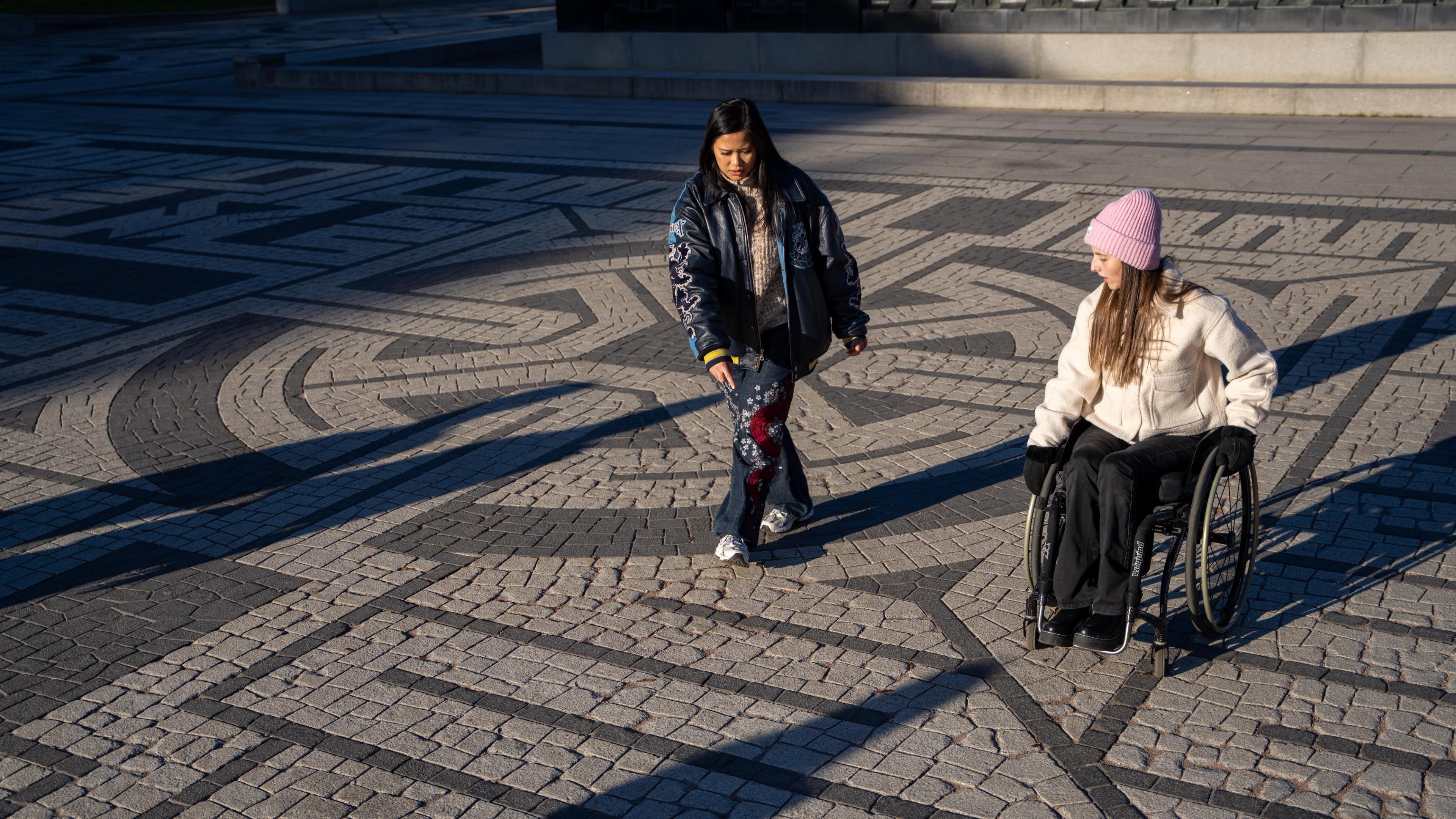
Around the Fountain, Vigeland created an 1,800-square-metre labyrinth plaza, paved with mosaics in black and white granite.
The Monolith
At the centre of the park rises The Monolith, a 17-metre-tall column carved from a single block of granite.
121 human figures spiral upwards, bodies intertwined. Some figures appear to climb. Others seem to fall. Whether the movement is upward, downward, or both is left to the viewer.
Vigeland offered almost no explanation. He called it fantasy, and famously said:
Although the park carries one name, it was created by many hands. The Monolith alone was carved by a team of 15 stonemasons over 13 years, working from Vigeland’s plaster model under his close supervision.
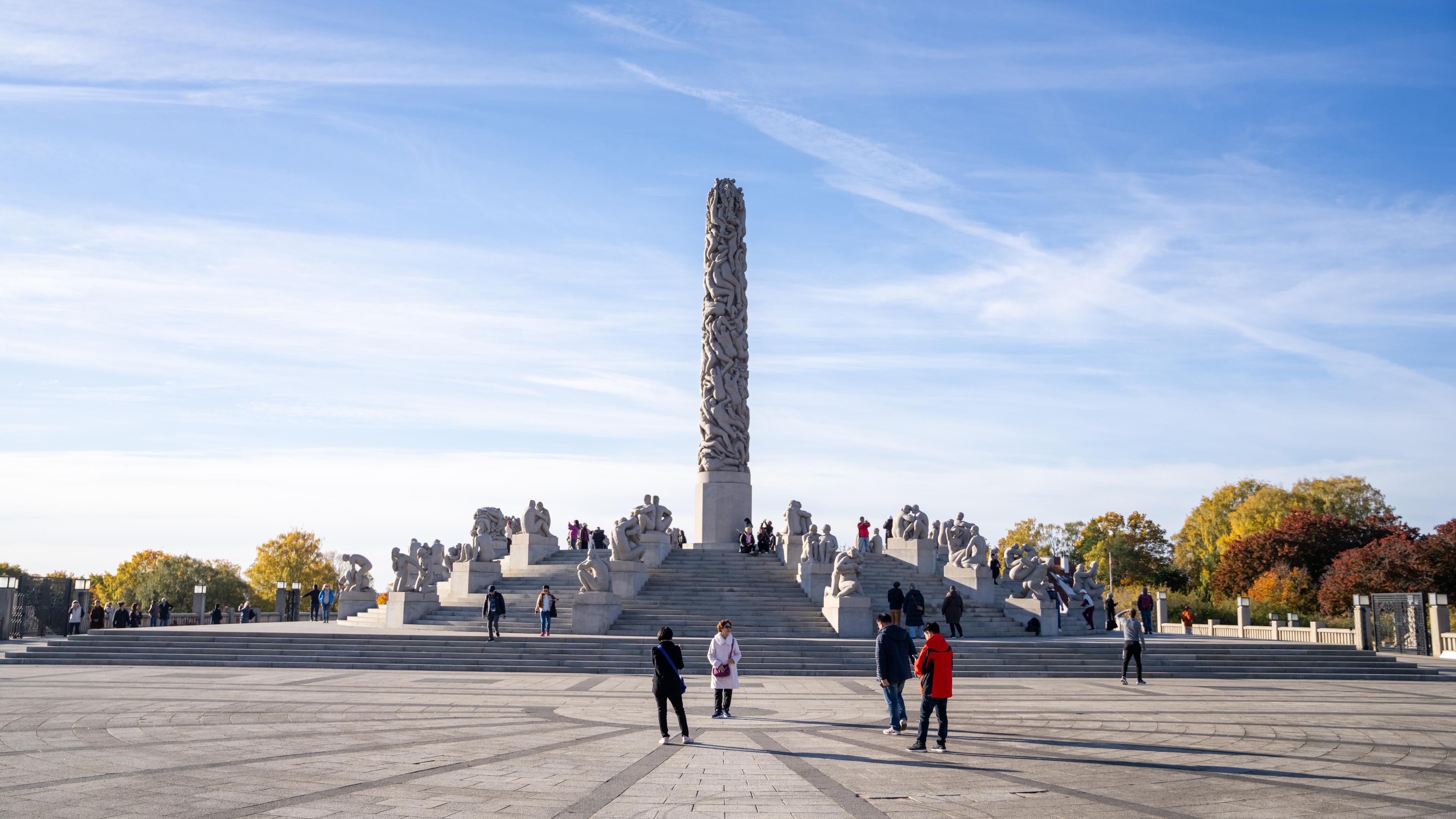
PS! Near the Monolith, look for two circles marked in the paving. Step inside one and speak, sing or stomp – your sound will echo back to you.
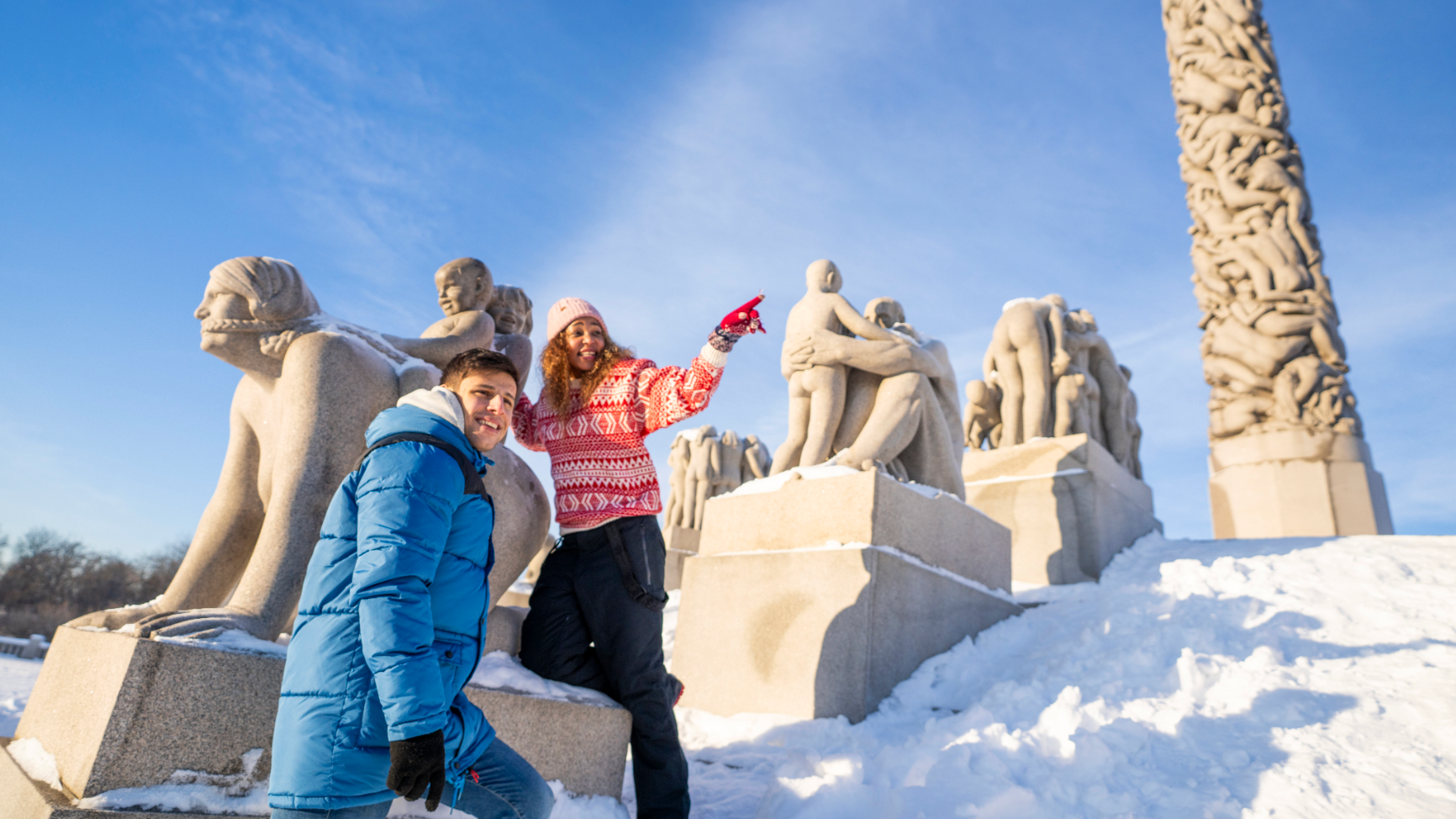
The park is just as striking in winter and if you’re lucky, you can even go cross-country skiing here.
For a deeper understanding of the vision behind it all, continue the journey indoors at the Vigeland Museum, once the artist’s studio and home.
Carefully composed in every detail, it remains a quiet pocket of calm in the city.
Here, visitors see a miniature version of the park: plaster models, early studies, and works that were never completed. The process becomes visible, and the repetition, the corrections, the obsession become clear.
Vigeland’s private life was complex. He had several relationships, two children were born early in his career, and he later remarried. Still, his primary commitment remained to the work itself.
The apartment
As part of his agreement with the City of Oslo, Gustav Vigeland was given a studio and a place to live close to his work. Architect Lorentz Ree designed a purpose-built apartment for him at the very top of the building.
Here, nothing is incidental.
Vigeland chose to design the apartment in every detail. Warm terracotta walls meet green panelling, a colour palette repeated in cushions, rugs and textiles. His wife, Ingrid Vigeland, whom he married in 1922, wove small textiles according to his strict instructions – a quiet nod to Norwegian craft traditions and the Arts and Crafts ideals of the time, where the quality of objects was seen as inseparable from the quality of life.
The artworks on the walls are his alone. The pastels date from his travels to southern Norway, where he captured landscapes from his childhood, a personal counterpoint to the monumental work outside.
Vigeland and Ingrid moved into the apartment in 1924. In the 1940s, Ingrid moved out, and Vigeland lived here alone in his final years. The second bed was removed. What remains is a restrained, almost austere space, shaped entirely around work.
In the circular room above, Vigeland planned a series of reliefs to surround the space. He never finished them. But he knew exactly where his story would end.
At the very top of the building stands the mausoleum he designed to house his urn.
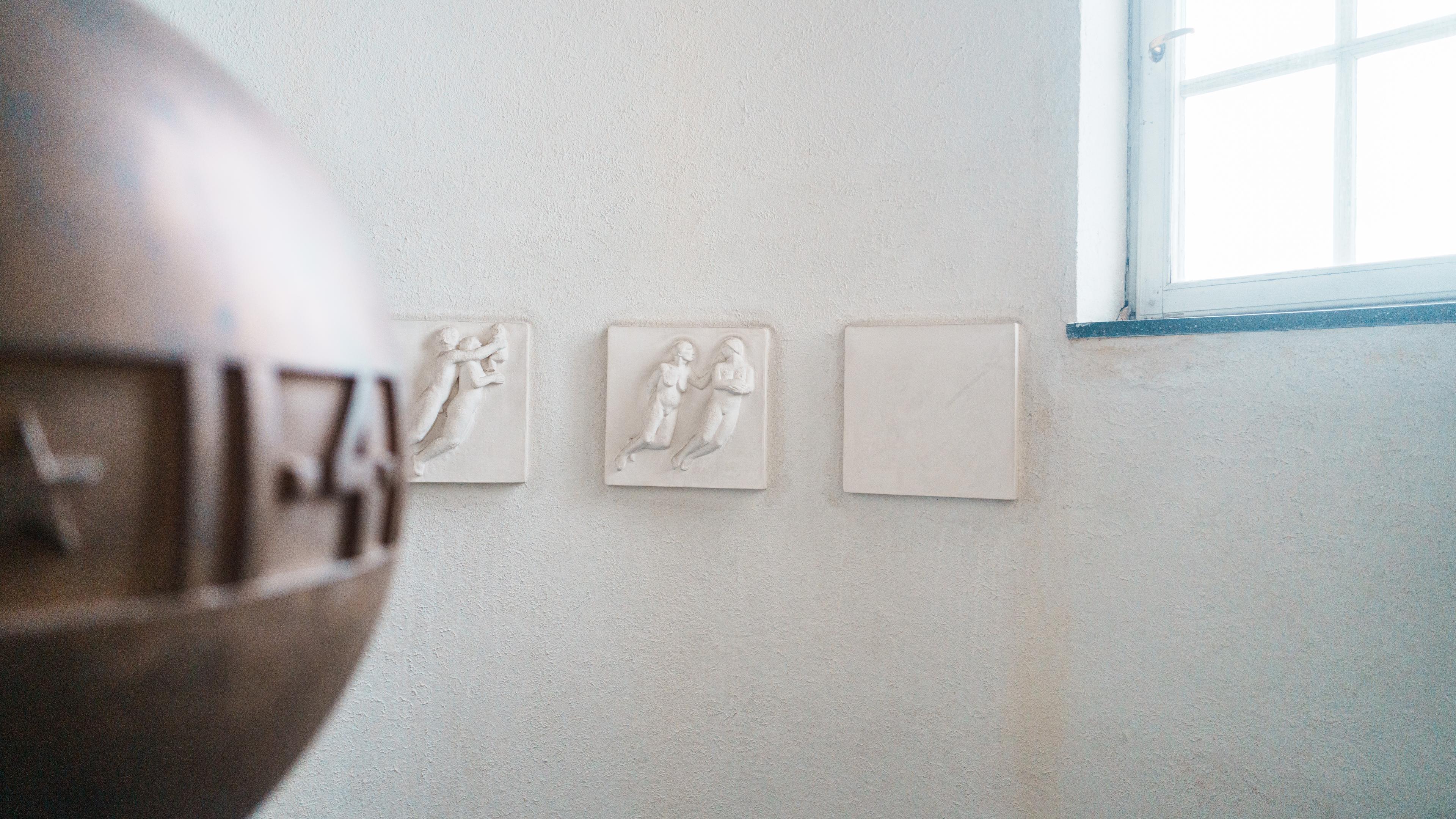
Some of his works were never finished. The artist's own final resting place, however, was carefully chosen.