In the Setesdal valley, a passionate local community is reviving Norway's iconic wooden architectural heritage by building a traditional stave church, crafted using Viking Age techniques. The church is scheduled to be complete in 2030.
How to build a stave church
… without modern tools!
Imagine stepping 800 years back in time. Horses pull timber. No modern machines, power tools, or materials. Just wood, axes, skill …
… and a community determined to bring history to life.
Norway hasn’t seen these building methods in centuries.
But here, in Setesdal, a new stave church is rising up.

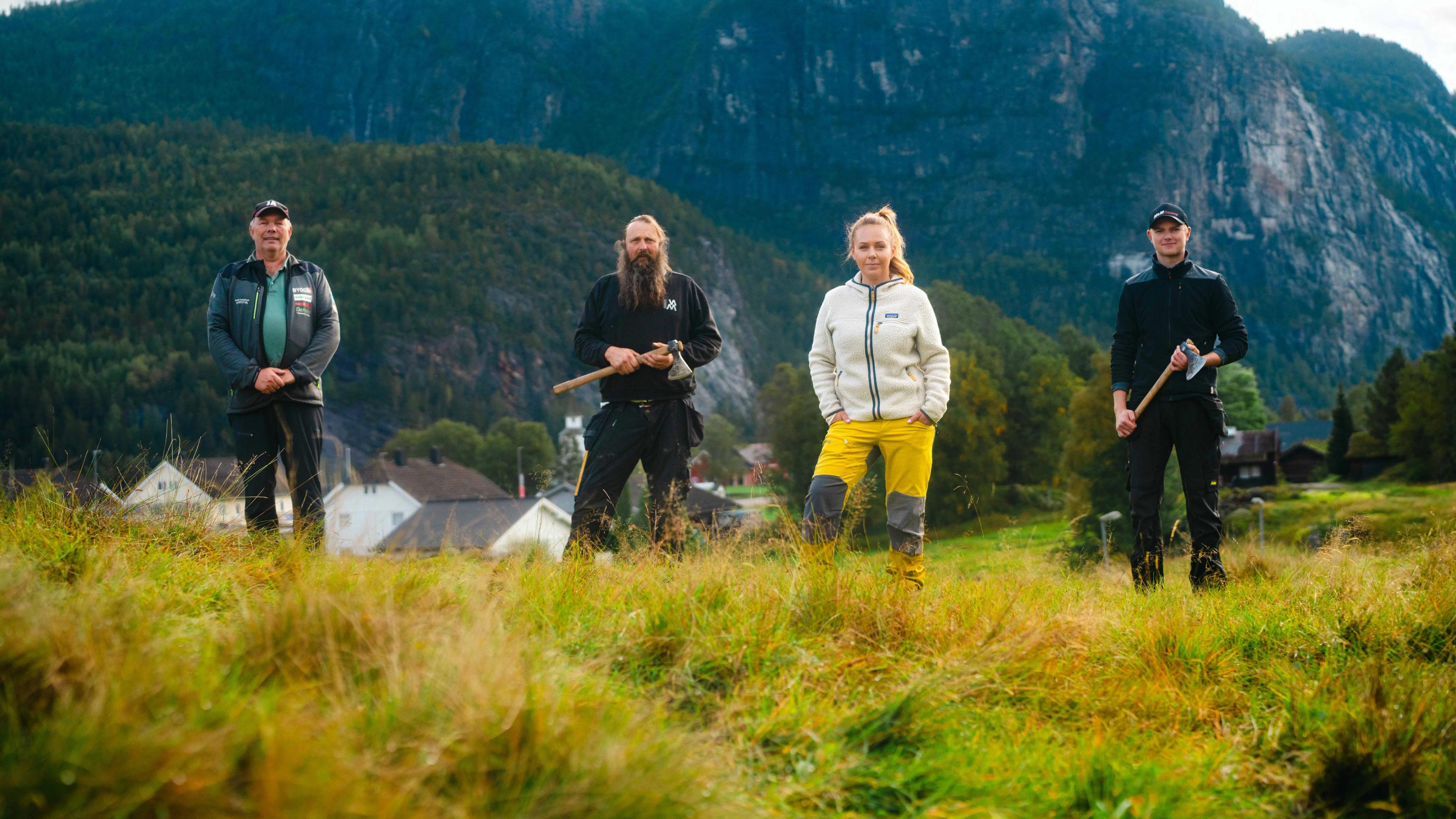
Sandra Birkenes, Project manager
A stave church rises up in Setesdal
"If we had known how big it was going to become, we might not have dared to start," says project manager Sandra Birkenes.
Building a stave church in the 21st century without using modern tools may sound like an extremely ambitious undertaking. Yet in Rysstad in the picturesque Setesdal Valley in Southern Norway, the local community is doing just that.
The original goal was to create an attraction for the village, which could boost tourism and local businesses in the valley. The project has since expanded far beyond the local area to become a national endeavour.
Viking heritage
During the Middle Ages, when much of Europe was building cathedrals in stone, Norway was developing a unique wooden church tradition: Stave churches, named after their corner posts or staves, which feature timber frameworks with walls of upright planks.
Many are adorned with intricate carvings of Norse motifs, such as Viking ships, in addition to Christian symbols.
Stave churches were often built on ancient sacred sites, where people once gathered beneath the open sky to worship. At its peak, it's likely that Norway had between 1,300 and 2,000 stave churches.
By the 19th century, a combination on demographic changes, disrepair, new construction practices, fires, and new church laws led to most of these churches being lost. Today, only 28 remain, preserved as treasured monuments to Norway’s cultural heritage.
The reconstruction
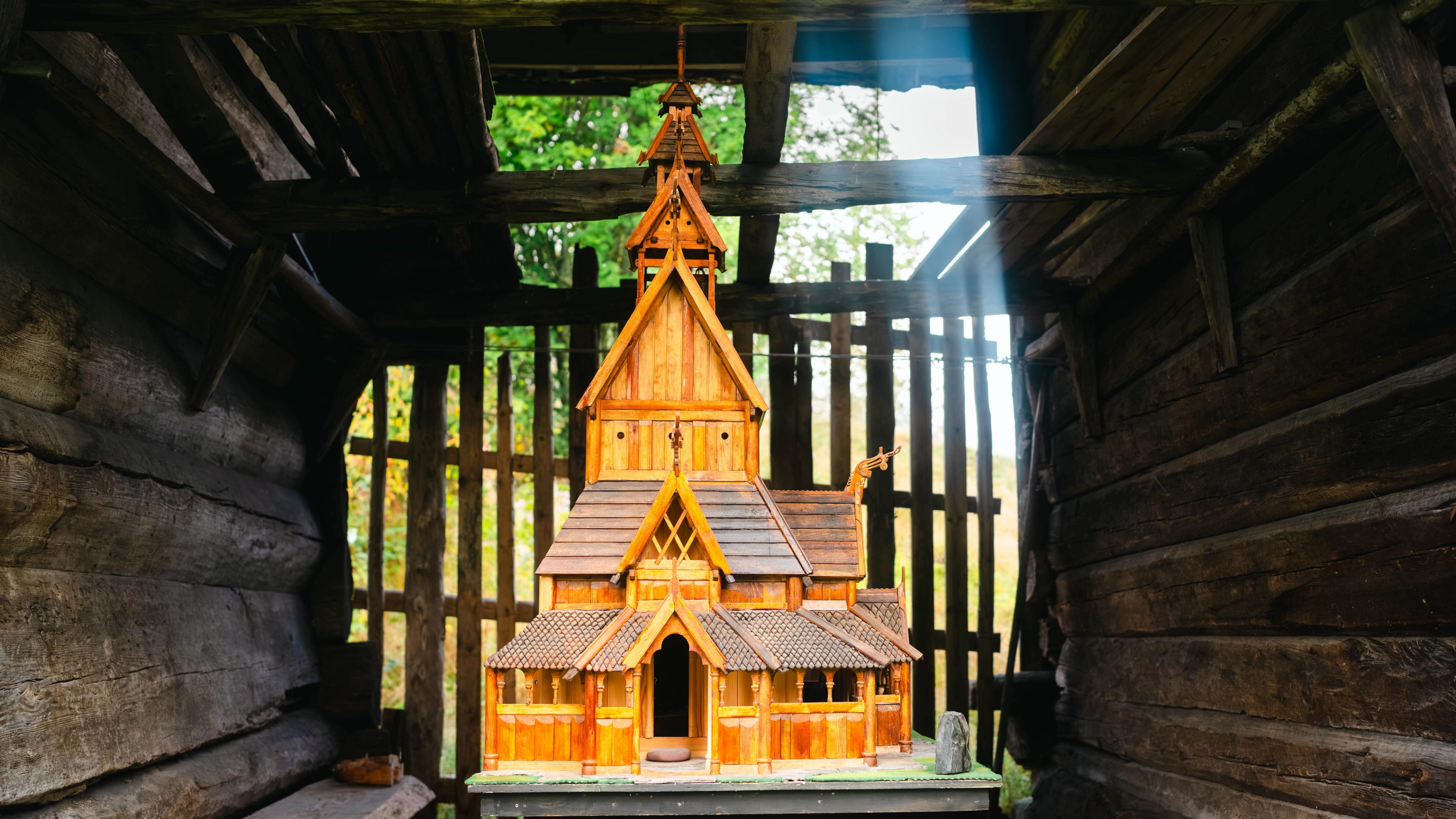
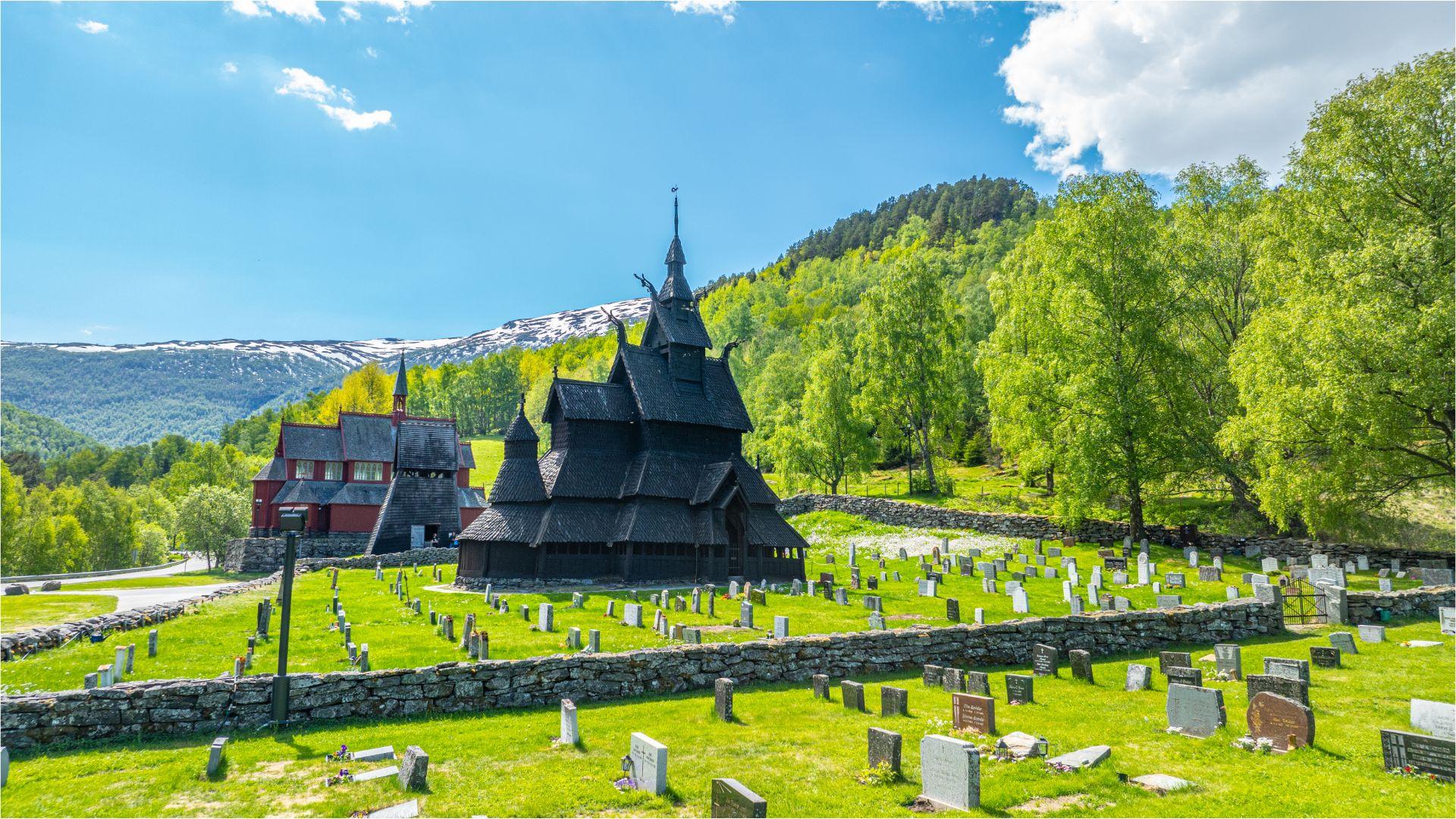
When choosing a model for the stave church, the team looked to Norway's best-preserved example: the Borgund Stave Church in Lærdal in Fjord Norway. While the new church will include local details based on the team's own designs, Borgund offers the most precise blueprint.
The Setesdal Valley was the historical home of the Hylestad stave church, which once stood in a field in Rysstad before being demolished in 1664.
A ground radar scan was conducted over the site where the church once stood. The results show that the church’s measurements are almost identical to those of Borgund stave church. Although the new church will not be built on the original site, as the site is protected, it will be located just across the river, next to the Setesdal Museum.
No modern tools
And the coolest part? The team's aim is to build the church using only techniques from the Middle Ages. Of course, this comes with its own set of challenges when meeting modern safety standards.
"When it comes to raising the 10-meter-high walls by hand… I’m really looking forward to seeing the construction process without any modern equipment like cranes," says Sandra.
Big questions like how the walls were originally raised, might even result in the team building twice to figure out which method was most likely used, she explains.
"We joke that we might end up like the church in Barcelona, which is never finished," she adds.
Even the tools used by craftsmen are handmade to replicate those from the period, allowing the builders to recreate the same marks in the timber as those found in the original churches.
In addition, sourcing the right timber is tricky, as they must use wood from slow-growing trees of the highest quality. While the original builders had easier access to these trees, the team hopes to find what they need locally in Setesdal, although they may need to look beyond the local area.
1,000 people at work
More than a thousand people, from eager students to master craftsmen, are contributing to the project.
One of the key people behind the project is Øyvind Mauren. What began as a hobby in carpentry at age 14 grew into a lifelong passion for historic buildings and the Middle Ages. Today, he works full-time restoring old buildings.
Together with Marton Laksesvela and Øyvind Jacob, he has already spent 1,800 hours in constructing the first model of the new stave church.
An open, living classroom
The project serves as important documentation and research to gain deeper understanding of Norwegian cultural heritage and building traditions.
The church is scheduled to be completed by 2029–2030. But it is already attracting widespread attention. The project will remain open to visitors throughout and will serve as an attraction right up until it is completed and beyond.
Visitors will be able to take part in activities during the building process, such as blacksmith work and wood carving. So if you've ever dreamed of stepping into the shoes of a Viking, here's your chance!
An exciting future
The incredible level of interest in the project has surprised the team.
"I thought it would be quite niche, but we’ve had inquiries from around the world about taking part, which could open doors to both national and international funding," says Sandra.
In fact, the project’s appeal has even caught the attention of international media. France TV visited the site and featured the project in a series on Norwegian stave churches.
The team also see opportunities for local businesses, like crafting a stave church beer together with a local brewery. “The building will be a landmark with a 'stop effect,' but beyond that, it will also open new opportunities for existing businesses,” Sandra adds.
Visit a stave church
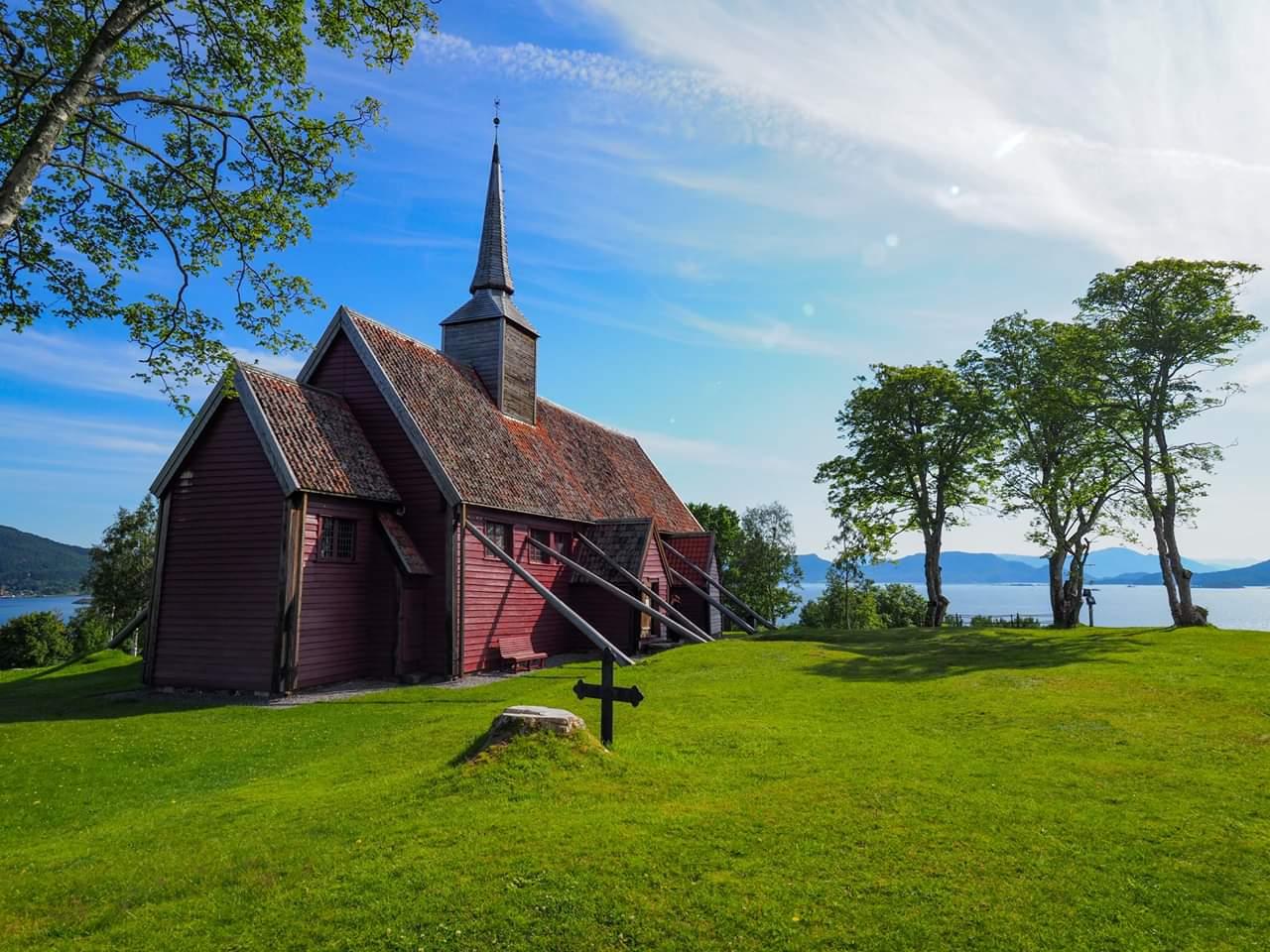
Today only 28 stave churches of varying sizes remain in more or less good condition.
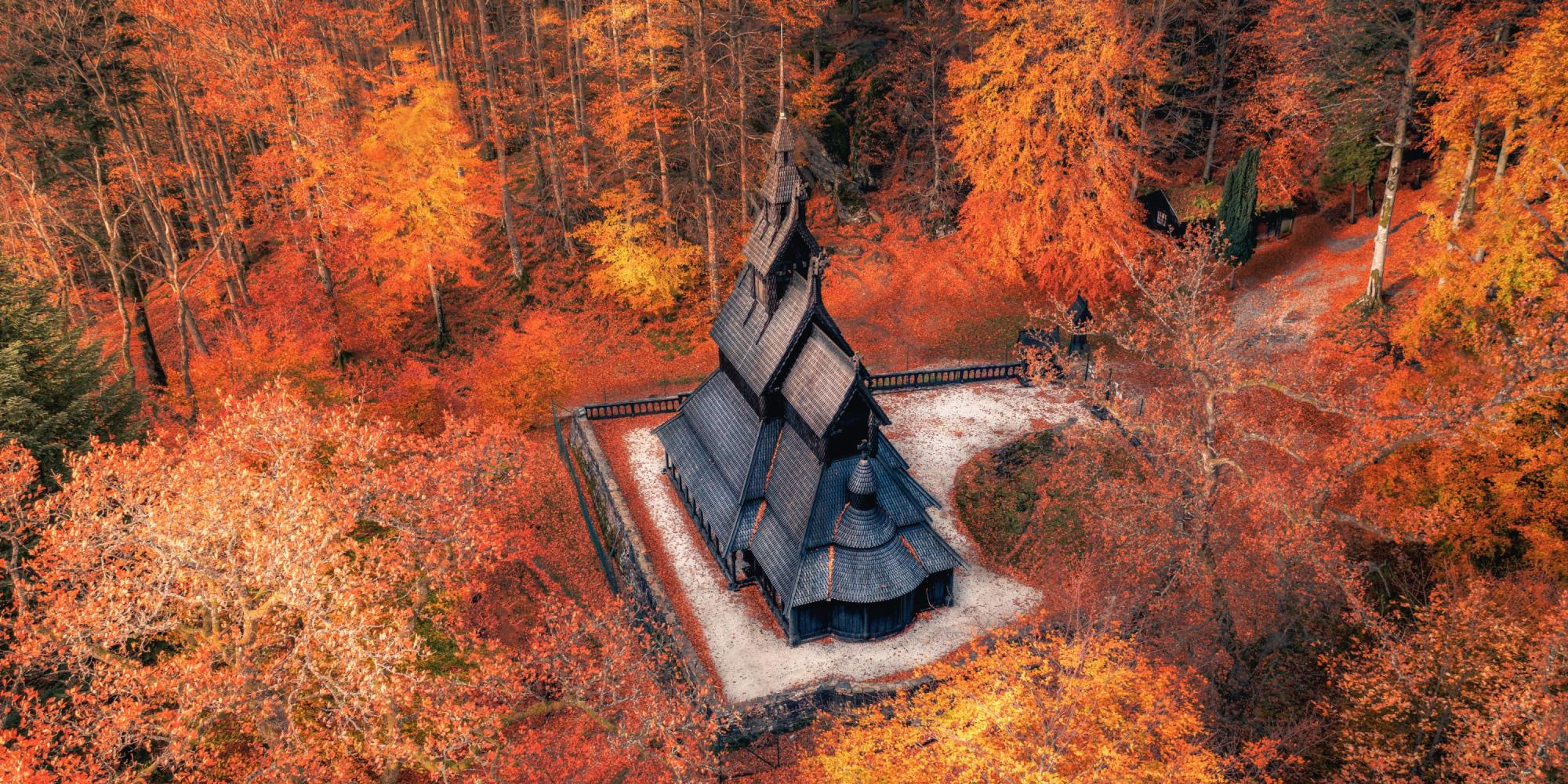
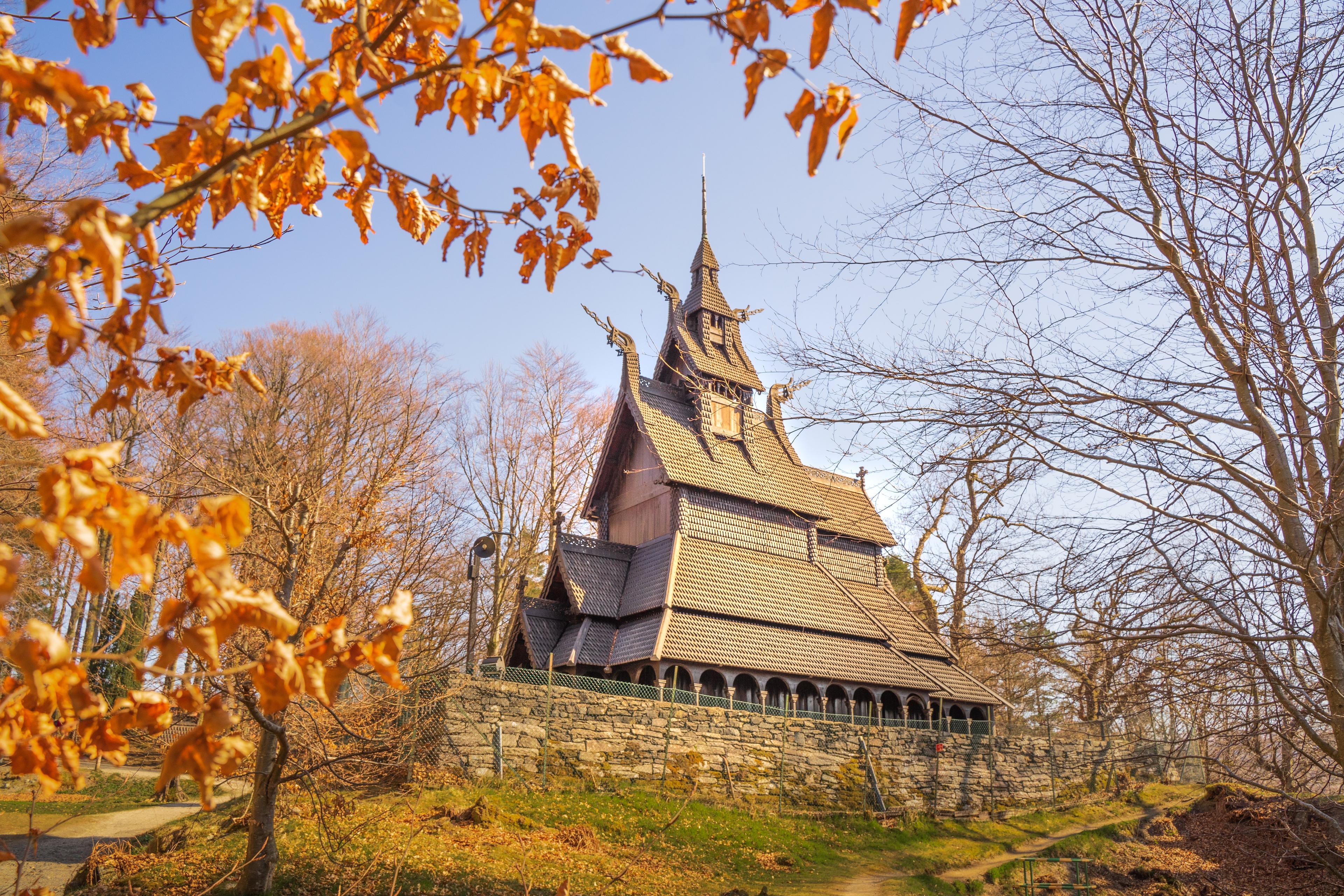
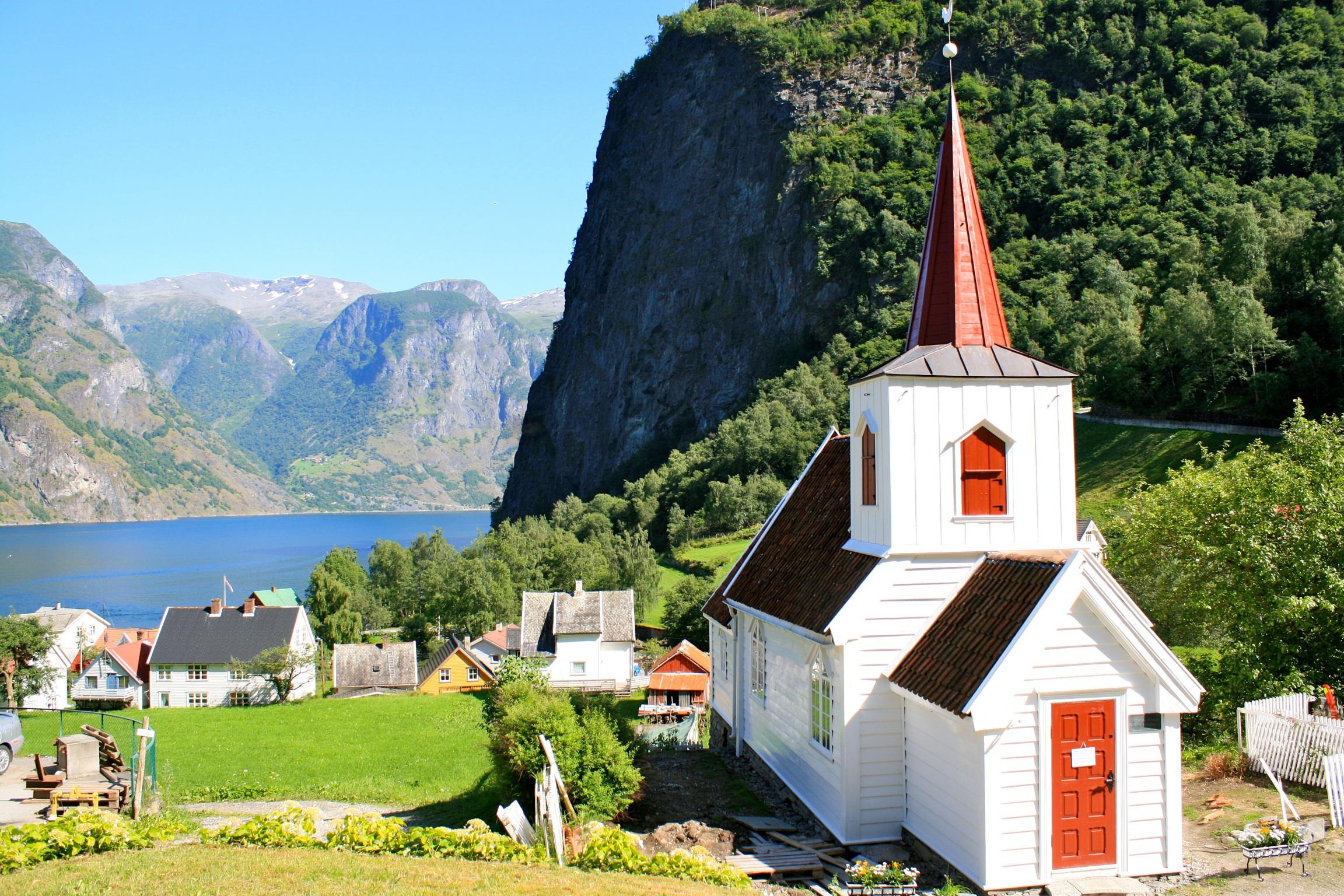
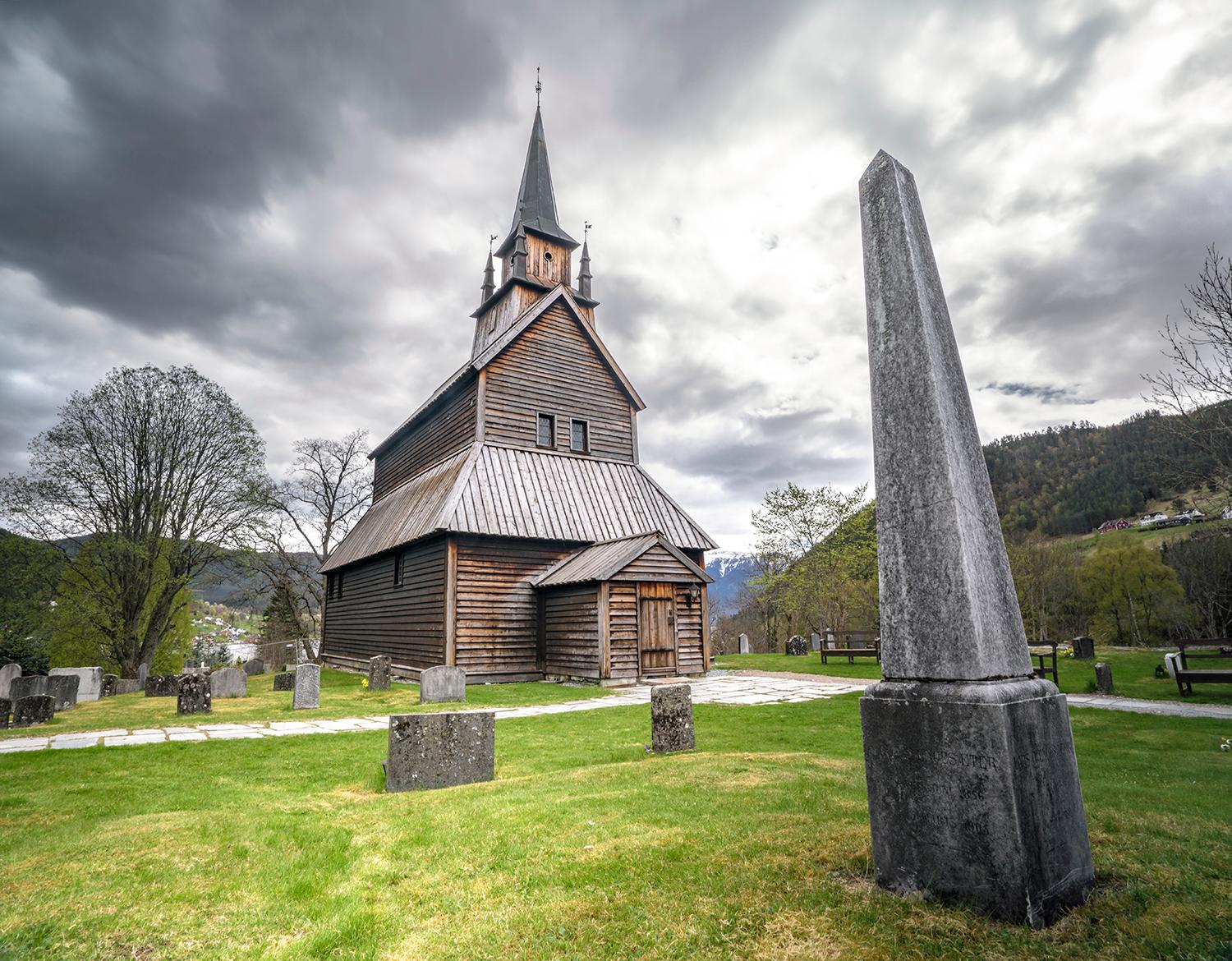
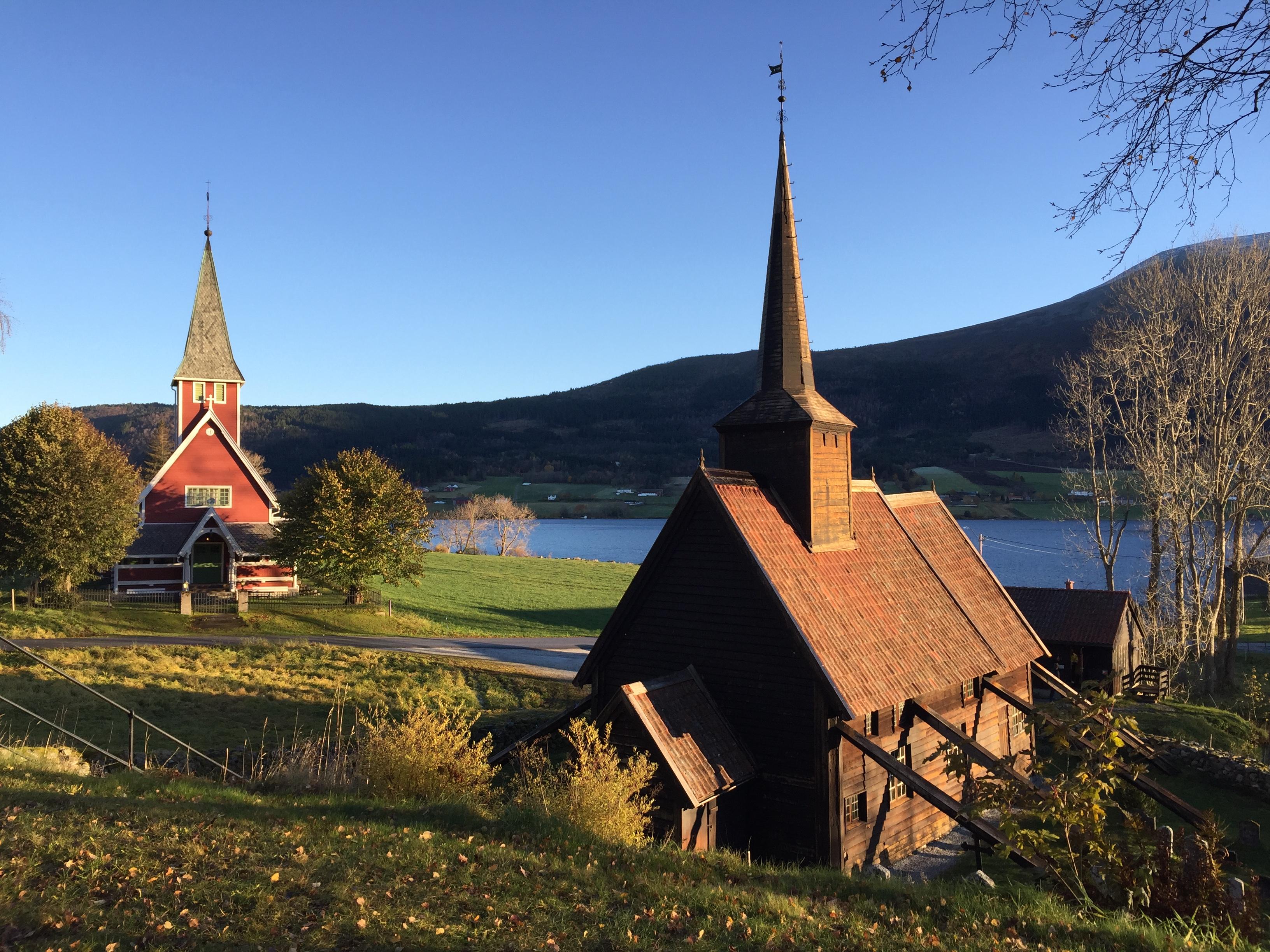
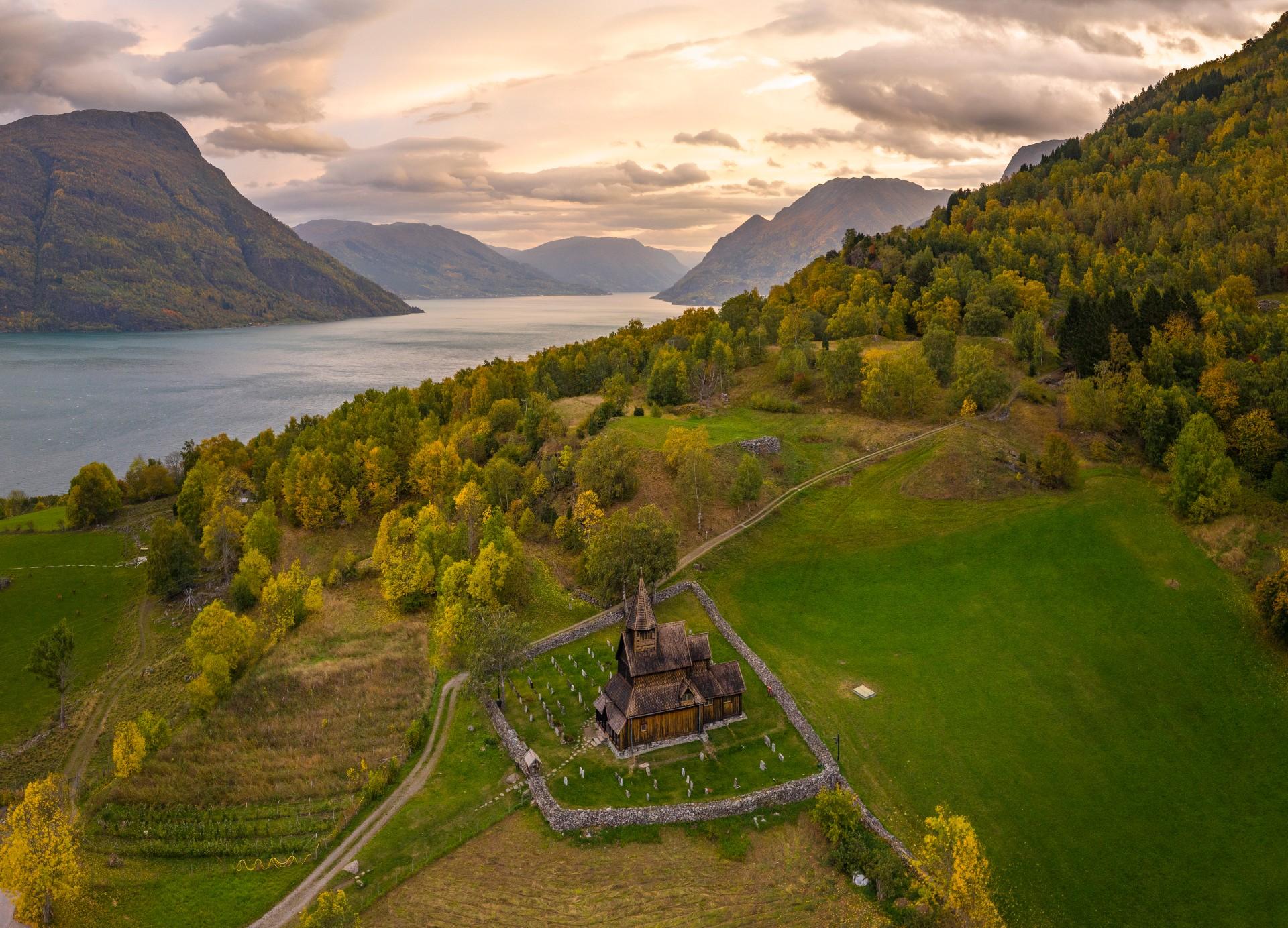
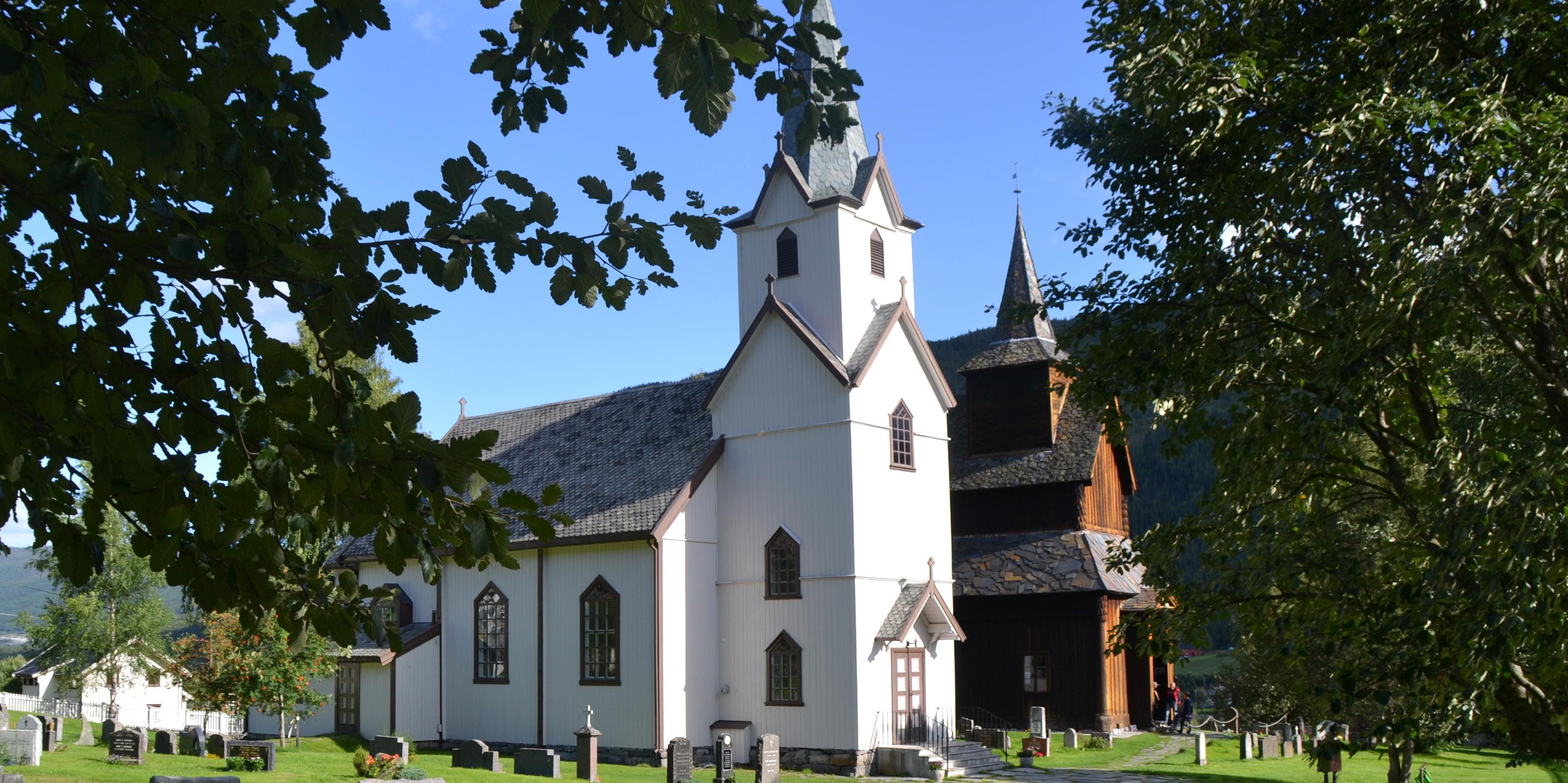
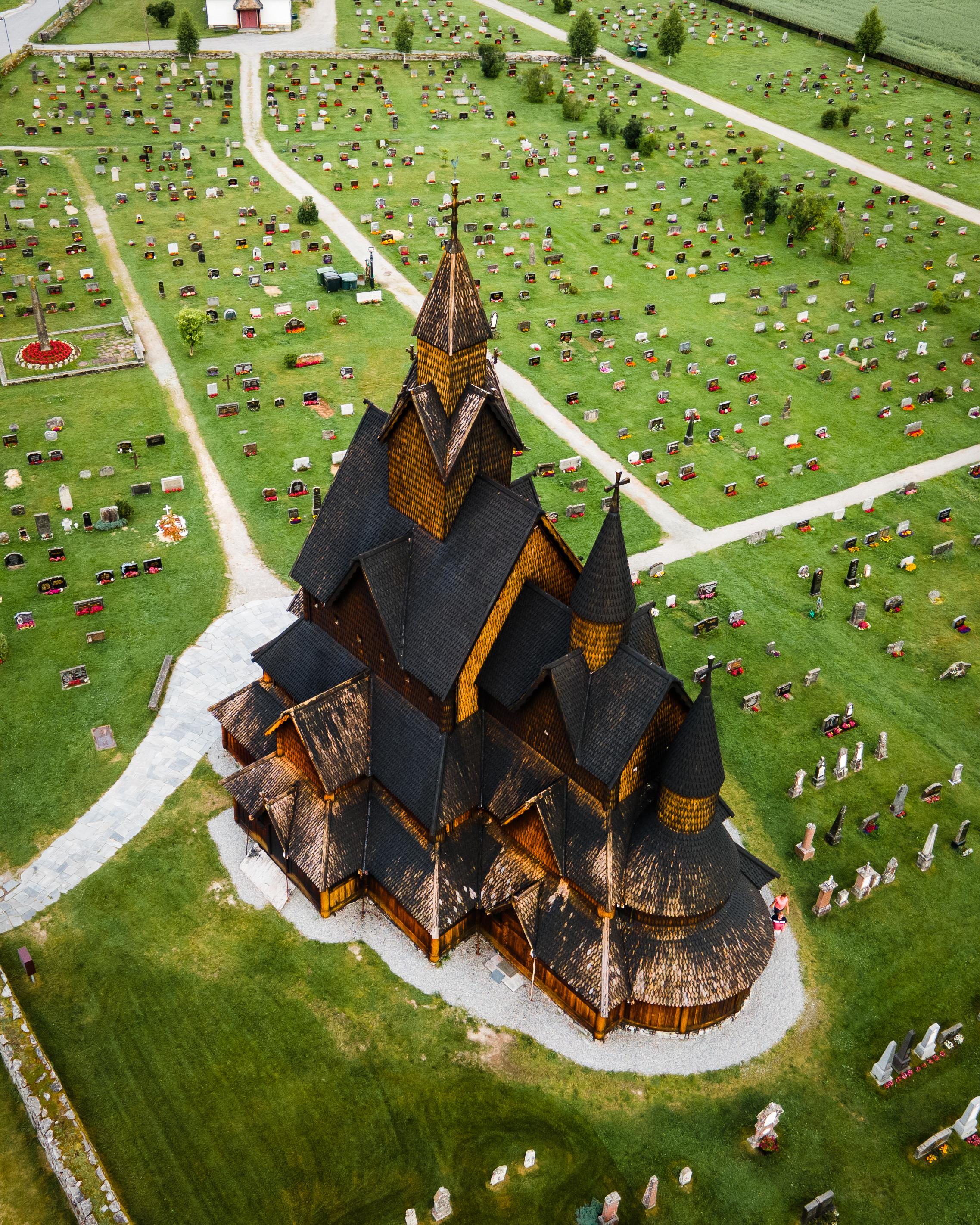
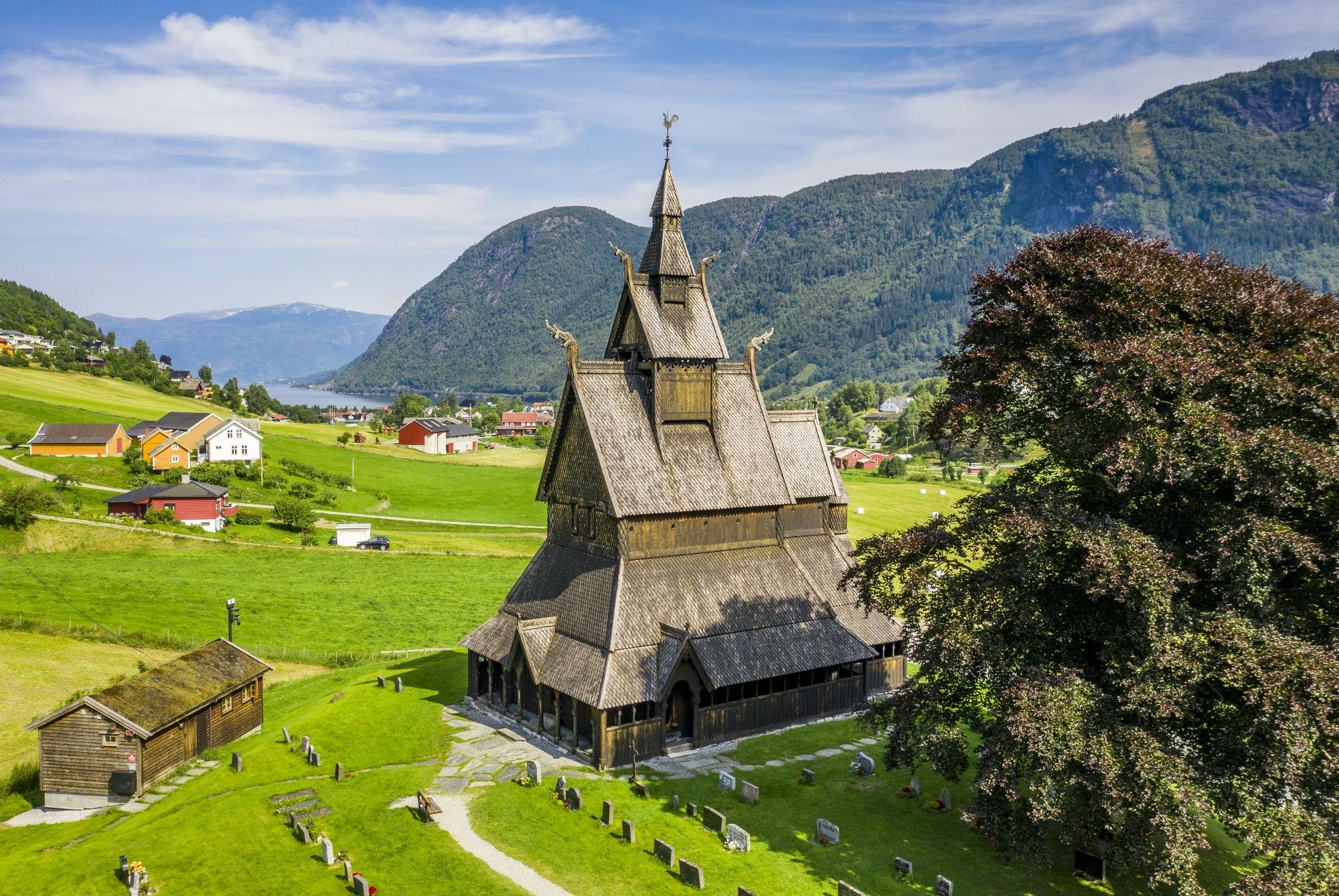
If you want to experience the best-preserved stave church, which also serves for the model for the new church being built in Setesdal, head to Borgund stave church in Lærdal in Fjord Norway. You can also see other beautiful examples of elaborate stave churches, including the UNESCO-listed Urnes stave church in Luster, Heddal stave church in Telemark, and the replica Fantoft stave church in Bergen, to name a few.
 Ål
ÅlÅl Stave Church Museum
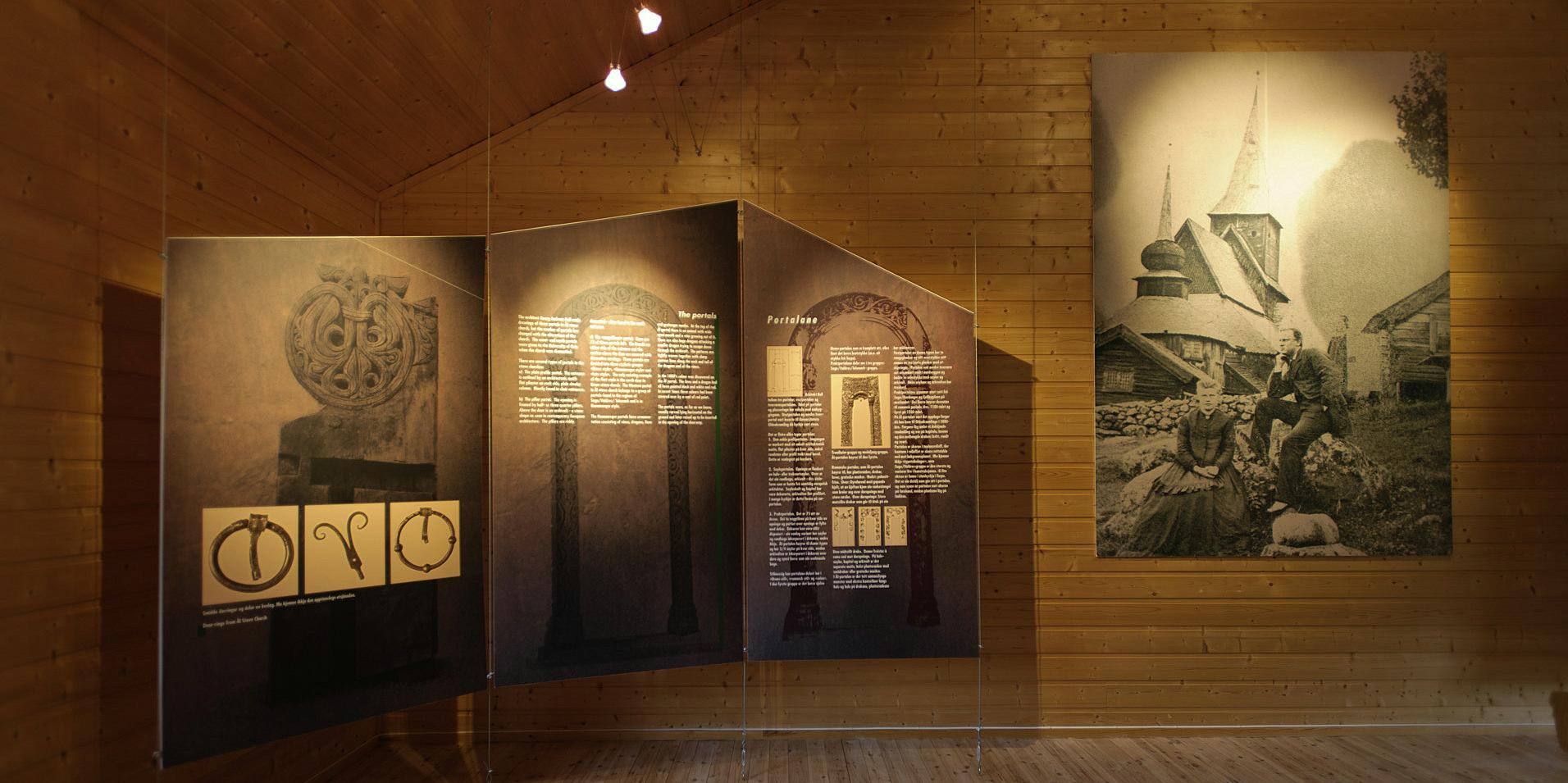
The Ål Stave Church dated from the latter part of the 12th century was richly decorated at the time of its demolition in 1880. The main doorway and the ceiling painting can be seen at the medieval exhibition at the Historical Museum in Oslo. Some of the church's fittings as well as a copy of the Ål ceiling can be found in Ål Church. The site of the church was examined and planned, and today it forms part of the church park. In the 1990s, the Ål Stave Church Museum in Prestegardslåven in the church park opened. The museum restores and displays decorative panels from stave churches and it has a copy of the Ål doorway. The exhibition provides information about Ål Stave Cchurch and about Norway’s other stave churches in Norway. Free admission for children up to the age of 16, when accompanied by an adult.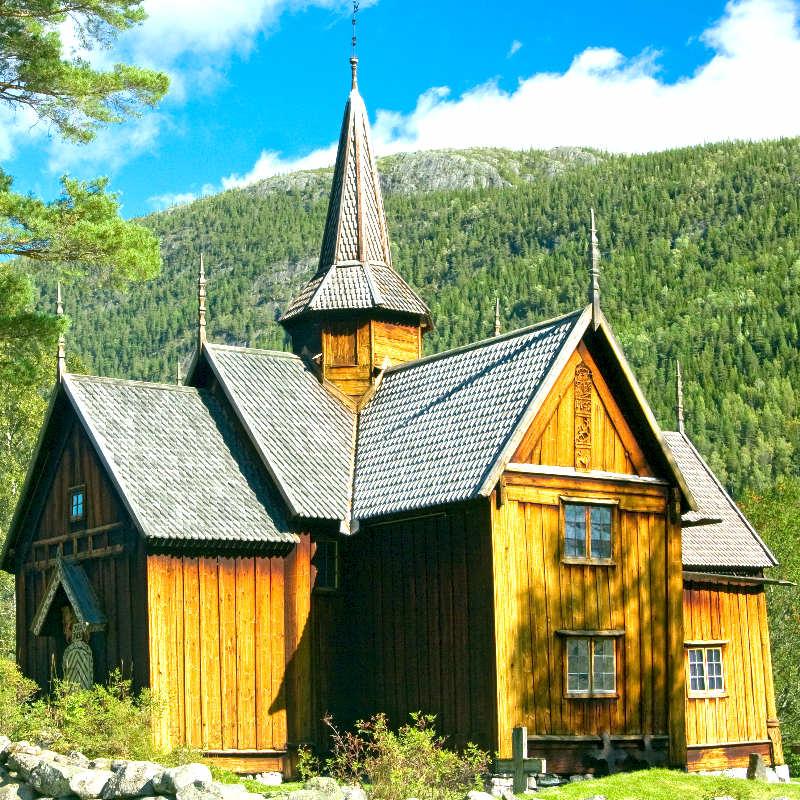 Nore
NoreNore Stavkirke
Nore Stave Church Nore Stave Church is located in Nore and Uvdal municipality in Buskerud. Nore Stave Church was built according to an architectural style called: Numedalstype. The church was built as a cruciform church approximately 1167, with galleries, a chancel and cross naves with an apse. This was very rare at the time, and one does not know of of any other church in Norway or Europe that could have been a model for this structure. The church was partially rebuilt in the 1600s and 1700s. The naves and chancel have remnants of beautiful coloring from 1655 and 1683. As in Uvdal Stave Church the woodcarvings in Nore are very artfully done. The nave's west portal has carved decorations with leaf vines and animal ornamentation. The animal figures are dragons and lions, and the portals are related to similar portals in Telemark. In the Stave Church are also two inscriptions, one of which is a prayer: "Wish me the very best". The two crucifixes may be from the Middle Ages, and during the excavation revealed a piece of painting that seemed to originate from the late Middle Ages. The Church seems to have been richly endowed with art objects. The Christian symbols probably spoke more directly to the medieval population than they do to people of today. Art objects and decoration of the stave churches in Nore and Uvdal confirms the impression we have from other stave churches, that the first half of the Middle Ages was the most creative period.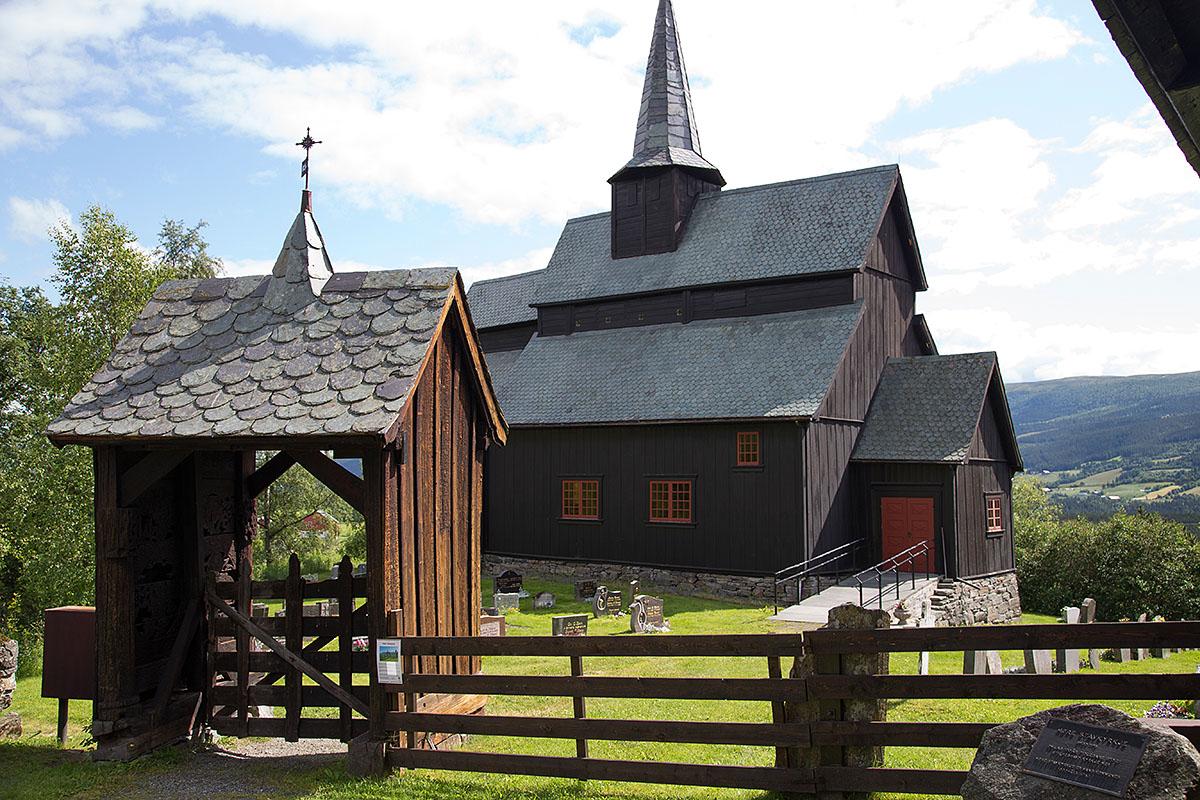 Ryfoss
Høre Stave Church
Høre Stave Church is rich in dragon and lion carvings from the Middle Ages, and among these are two beautiful portals. What used to be the ridge turret is today the entrance of the graveyard. An unusual runic inscription shows that Høre Stave Church dates back to around 1179. However, as the oldest coin found under the church floor is from around 1100, it is presumed to have replaced a previous, smaller sized church. An extension was built in 1822, and today still, Høre Stave Church serves the community as a regular parish church. The story behind the runic inscriptions found in the pulpit is exciting. According to legend, King Sverre passed through Valdres in 1177 when he fled before Magnus Erlingsson. Elling, the feudal overlord of Kvie, had joined King Sverre in his fight against King Magnus and his father the Earl Erling Skakke. When Erling Skakke fell in the battle at Kalvskinnet in Nidaros (Trondheim), Elling and his brother Audun decided to build Høre Stave Church as the runic inscriptions show: "In the summer of which the brothers Elling and Audun cut (timber) to this church, Erling (fell) in Nidaros." Admission (incl. guiding): Adults NOK 80,- Children 6-16 years NOK 50,- Family NOK 170,- Groups NOK 60,- per person (minimum 10 people) No student or senior discounts. Visits out of hours on request, minimum charge NOK 500,- Please note that we cannot accept foreign currencies, i.e. Euro.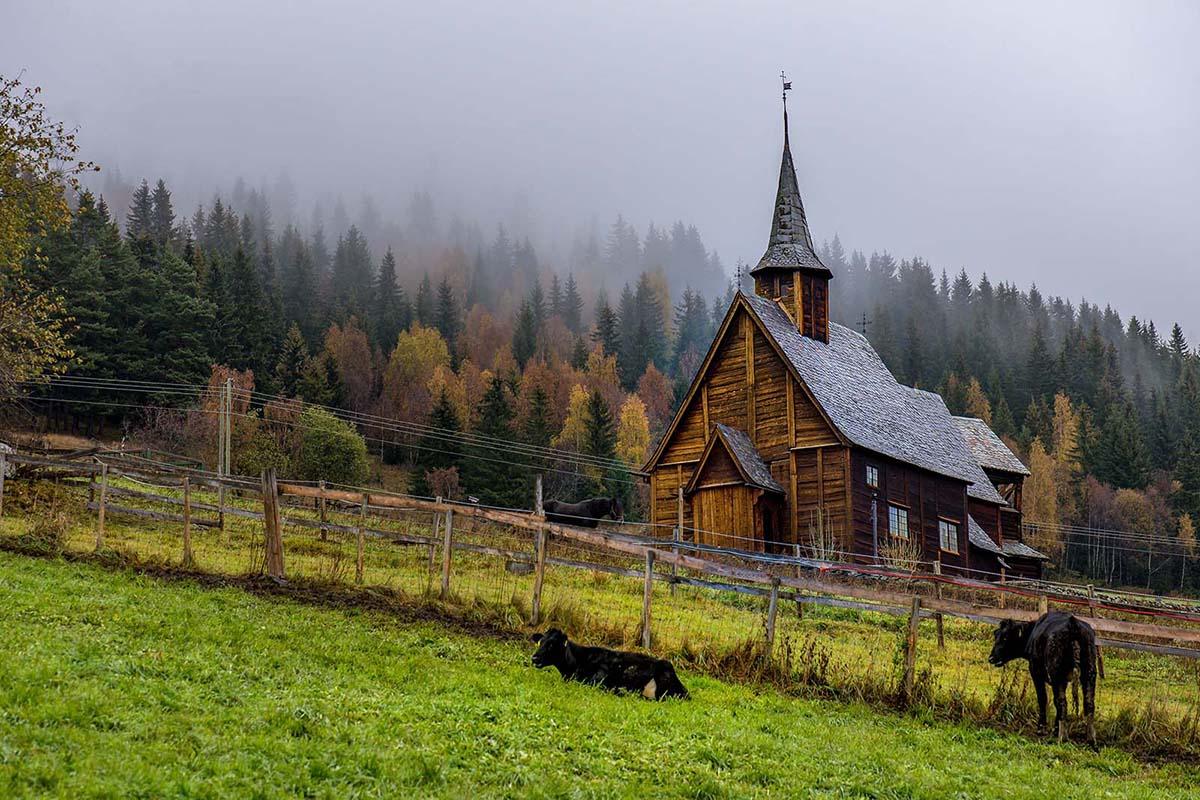 Lomen
LomenLomen Stave Church
Lomen Stave Church is believed to date back to around 1192. The oldest coin found is from King Sverre`s era 1177-1202. In 1750, the church was converted and extended as it had become too small to meet the needs of an increasing population. When the new Lomen Church was completed in 1914, regular use of the stave church ended. Today, it is only used for weddings and church services during the summer season. Wooden sections dating back to the Middle Ages have been stripped down to the woodwork, but post-reformatory parts are still painted. Several medieval portals featuring wood carvings and animal decorations can be found in the church. Of the soapstone font from the Middle Ages, only the base remains. A mediaeval chest leans towards the wall in the choir. It features a magic runic inscription that has almost been rubbed off. The Madonna-head on the altar is a plaster copy of the beautiful original from the 1200s. It was probably once part of a whole figure. The original can be found at Valdres Folk Museum in Fagernes. Admission (incl. guiding) - payment by cash only: Adults NOK 80,- Children 6-16 years NOK 50,- Family NOK 200,- Seniors NOK 70,- Groups NOK 60,- per person (minimum 10 people) No student discount. Visits out of hours on request, minimum charge NOK 500,- Please note that we cannot accept foreign currencies, i.e. Euro.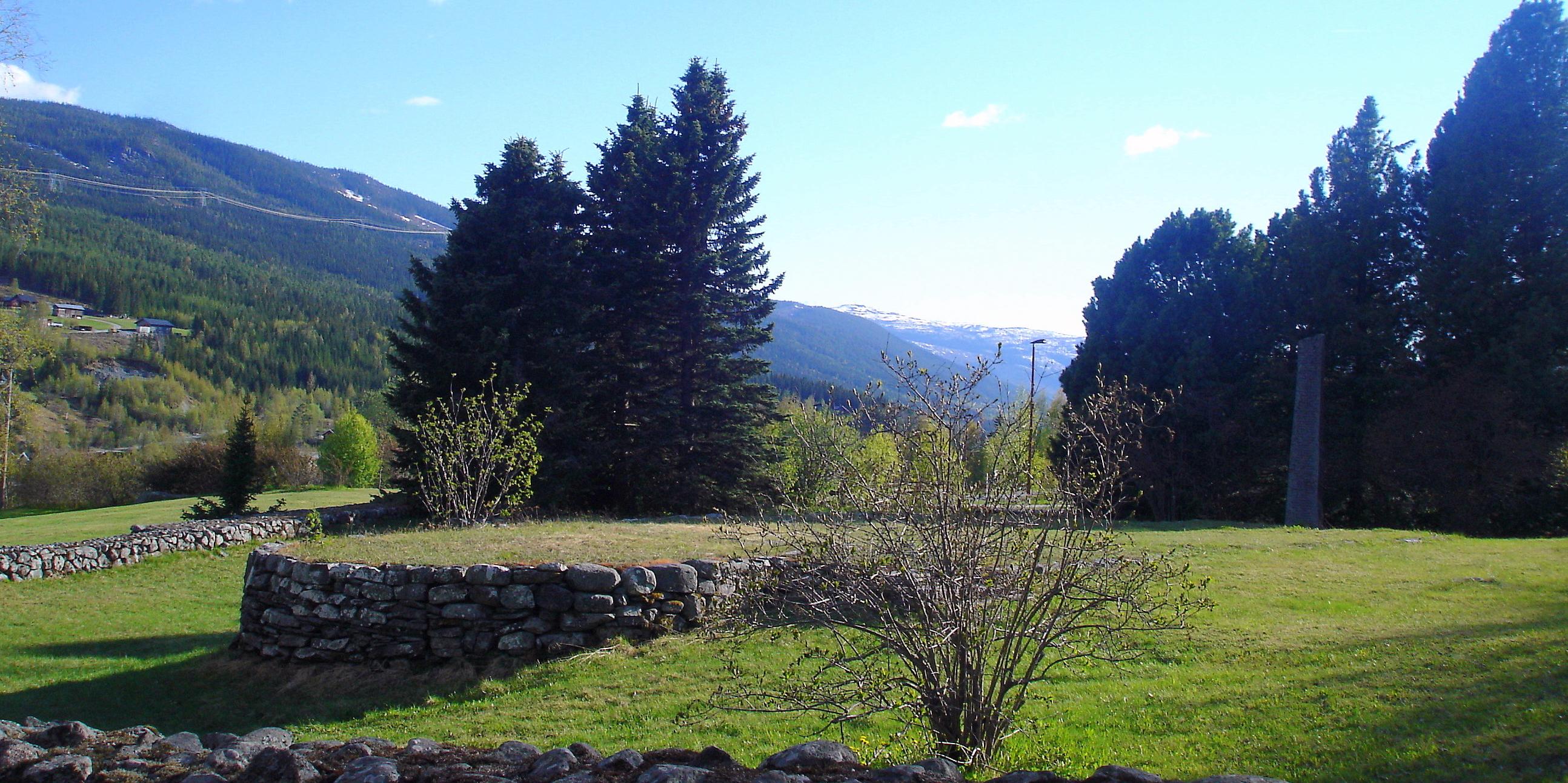 Ål
ÅlThe old Ål Stave Church site
Ål Stave church was erected around 1170 and demolished in 1880. The stave churches are a wooden building with a carrying construction of poles. The stave churches are today counted as among the most important European architecture in wood from medieval times. The stave church in Ål with its 18 poles was the largest church in Hallingdal. The church also changed appearance several times with expansions and reconstructions. In Ål Stave church they also found an ancient runic inscription that showed who was the constructor of the church. This site is located in the centre of Ål, parking spot by the schools.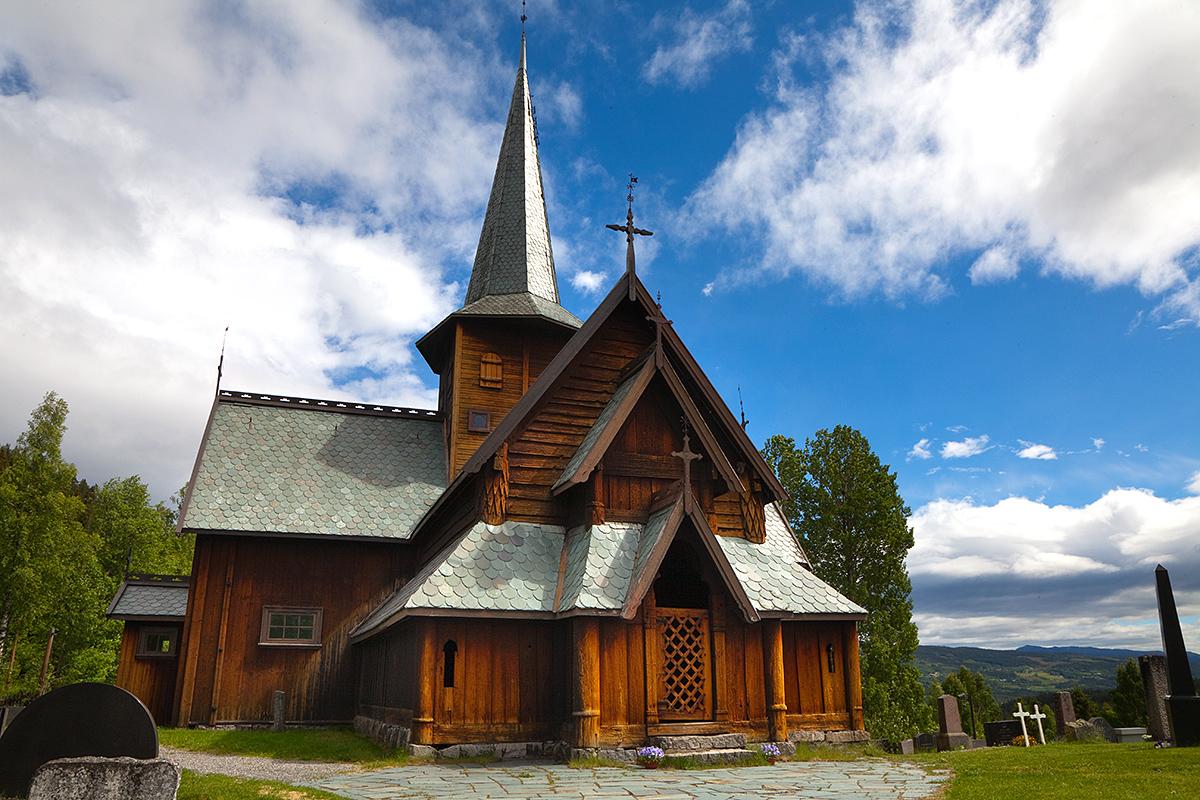 Hedalen
Hedalen Stave Church
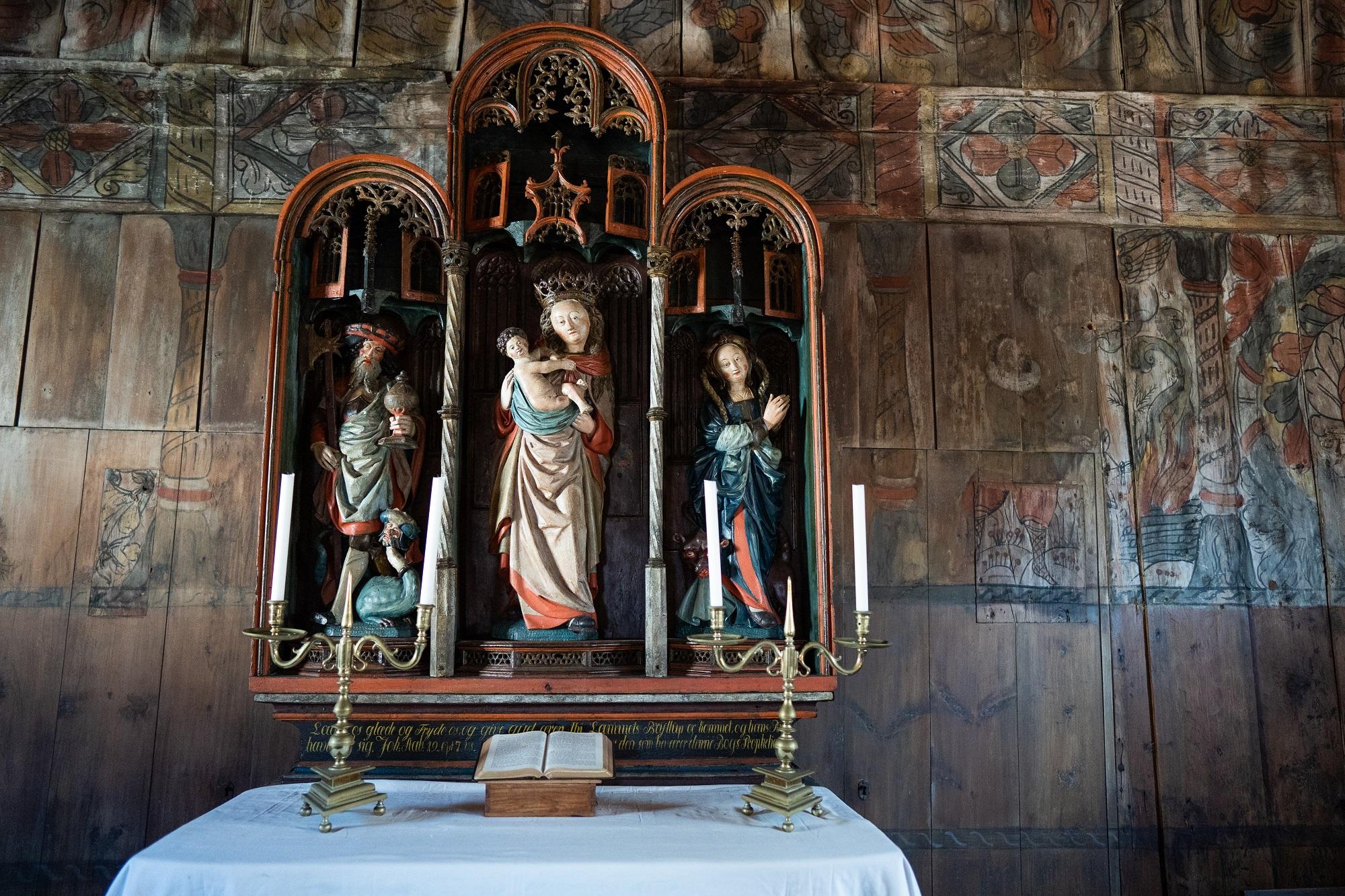
The Hedalen Stave Church may be the oldest of its kind in Valdres today. It comprises an unusual amount of catholic items and among these a reliquary. Only a few of these can still be found in Norway. The church dates back to around 1163, and coins from King Sverre's era 1177-1202 have been found under the floor. It is in use as a regular parish church. The west-facing portal features dragon and vine decorations from the late 1100s. These dragons symbolise the evil forces you leave behind before you enter the place of worship. The reliquary is the most treasured item in the church. It is made out of copper-gilded wood, and dates back to around 1250. The figures featured are Christ, St. Mary, St John, St. Jacob, St. Thomas, St. Olav and St. Peter. Norway has only a few such reliquaries left. Its original reliquary casket is still intact, and is the only one of its kind. The Hedal Madonna (sculpture of St. Mary), dating back to the mid-1200s, is one of the most stunning pieces of medieval ecclesiastical art in Norway. Originaly, the sacrament house was part of the triptych. Changes to this gothic triptych were probably made in 1699, and it was painted in 1769. Its crucifix dates back to around 1260-1280. The Romansque font is made out of soapstone, and has a cover dating back to 1250. In the sacristy, a bearskin is hanging on the wall. According to legend, there was no one left in Hedalen after the Black Death. A hunter found the church in the woods and shot a bear in front of the altar. But there were still people living in Hedalen, and maybe the bearskin was just the vicar's somewhat unusual rug in front of the altar. Admission (incl. guiding) Adults NOK 90,- Children 6-16 years NOK 50,- Family NOK 250,- Groups NOK 70,- per person (minimum 10 people) No student or senior discounts. Visits out of hours on request, minimum charge NOK 500,- Please note that we cannot accept foreign currencies, i.e. Euro.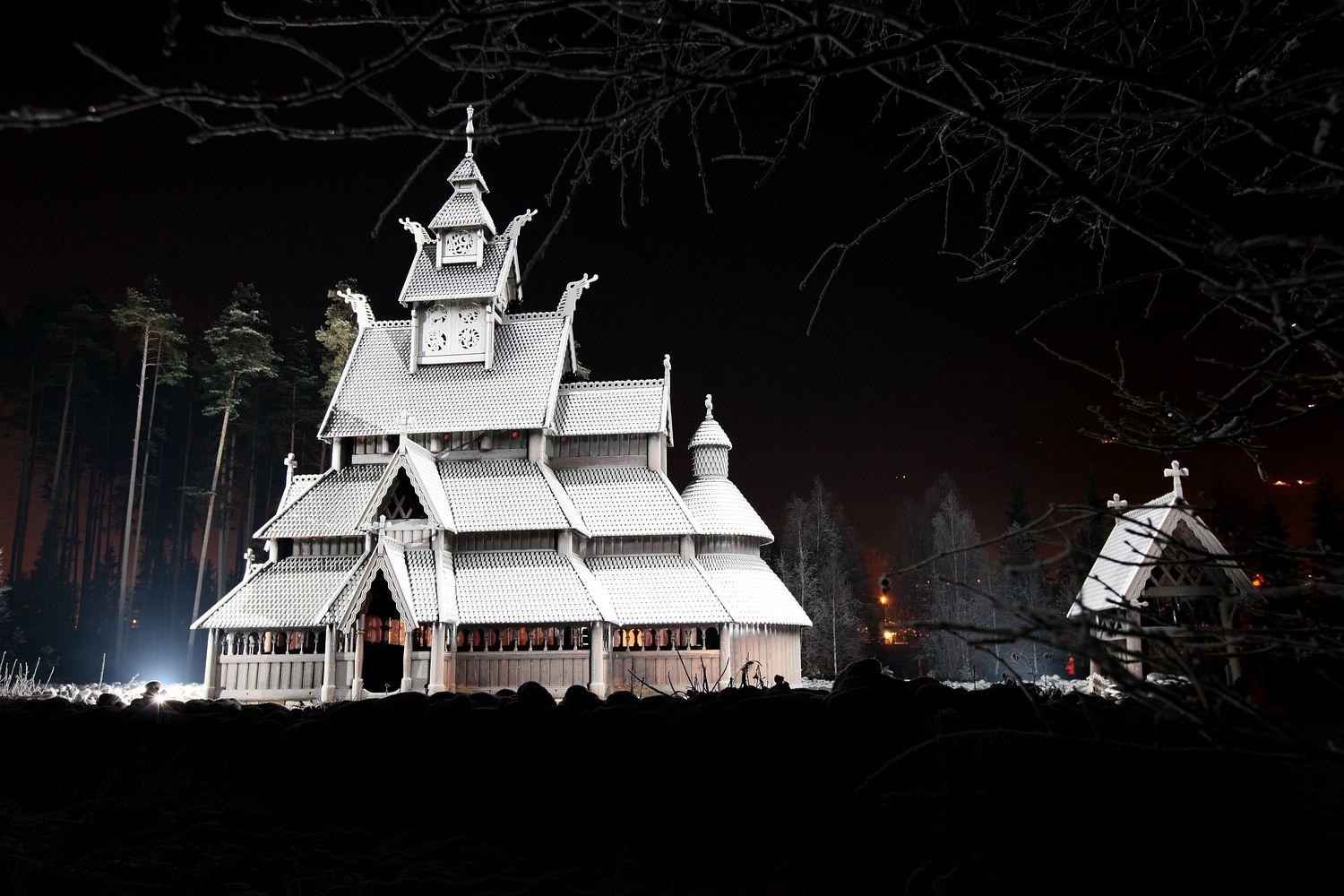 Gol
GolGol Stave Church
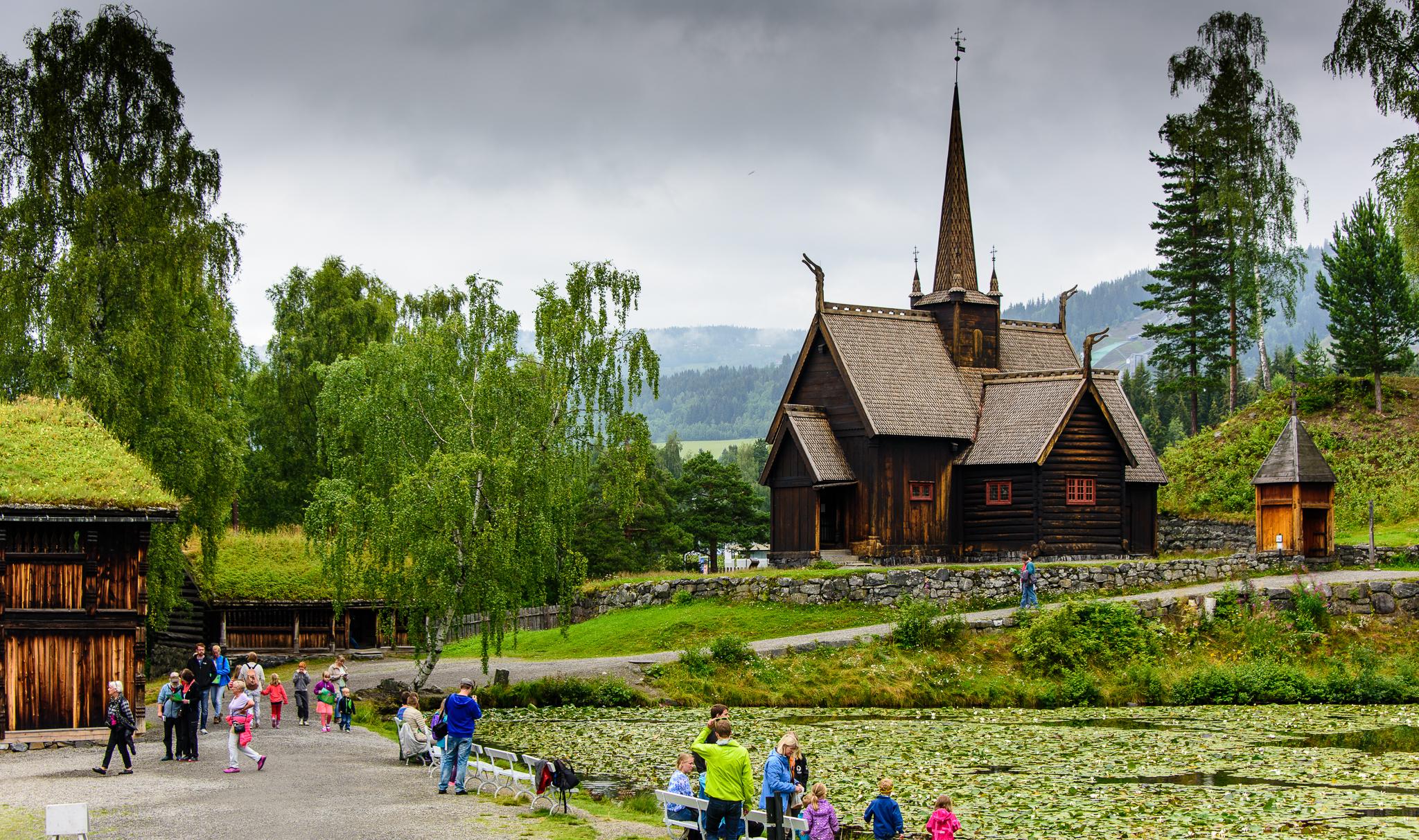
It is estimated that around 2000 stave churches were built between 1150 and 1350. This had to be an enormous achievement in sparsely populated Norway, meaning an average of 10 stave churches were erected each year. The accomplishment is no less impressive, considering all construction was done manually, using axes as the primary tool. This was when Norway had just been converted to Christianity, and the true faith had not yet been fully embraced. It's interesting to observe some Norse symbols used in the churches, such as Thor's hammer above the entrance, dragons on the roof, Odin, Thor, and others standing and supporting the church roof (the masts). Why these symbols found their way into a Christian church remains unknown. History suggests that Norwegians were uncertain about the new faith and wanted to keep "one foot" in Norse beliefs just to be safe. It is assumed that craftsman guilds led the construction of stave churches. When studying the construction, many aspects resemble boat building, which is precisely where these craftsmen gained expertise through centuries of constructing Viking ships and other boats. Hence, they possessed the skills to create some of the finest examples of wooden architecture. Garðar kirkja The original Gol stave church was moved to the Norwegian Folk Museum on Bygdøy in Oslo, belonging to the reigning monarch of Norway. Studies indicate that the church was built after 1216, with elements dating as early as 1157. The old stave church site is in the hamlet where Gol was located at the time, 300 meters southwest of the current Gol church on Leikvollen in Golreppen. The stave church was used until 1881, when Gol got a new one. Gol Stave Church began to deteriorate significantly in the 1800s. The church was also heavily modified due to increased space requirements. In 1882, the church was sold to the "Association for the Preservation of Norwegian Ancient Monuments," it was moved to Bygdøy Kongsgaard, now the Norwegian Folk Museum. The church was restored to its original form and size during the reconstruction at the folk museum, with doubts about the reconstruction, using Borgund Stave Church in Sogn as a model. Borgund Stave Church is considered the sister church to Gol Stave Church, possibly built by the same craftsmen. Gol Stavkyrkje The church on Storeøyne (the island in Gol) replicates the original stave church from the 1200s. The church was completed in 1994 and consecrated on July 10. Gol Stavkyrkje consists of a nave, ambulatory, gallery, choir, and apse. Three spires stand on the main roof. A challenge in copying a stave church today is the absence of the old, coarse pine forests. Suitable materials are hard to find. Behind the copying of Gol Stavkyrkje lies approximately 10 years of work. Local artisans built the church, and the woodcarving and furnishings were done by Hans Slettemeås from Telemark. Most of the timber was sourced from the valley. Textile artist Karin Stang created the textile work on the apse wall. The man behind the project is civil engineer Torbjørn Rustberggard from Gol. Stave Church - Why is it called a stave church? The reason lies in the robust masts (staves) supporting the church. The stave principle involves standing wall panels enclosed by sills above and below, with corner columns at each end.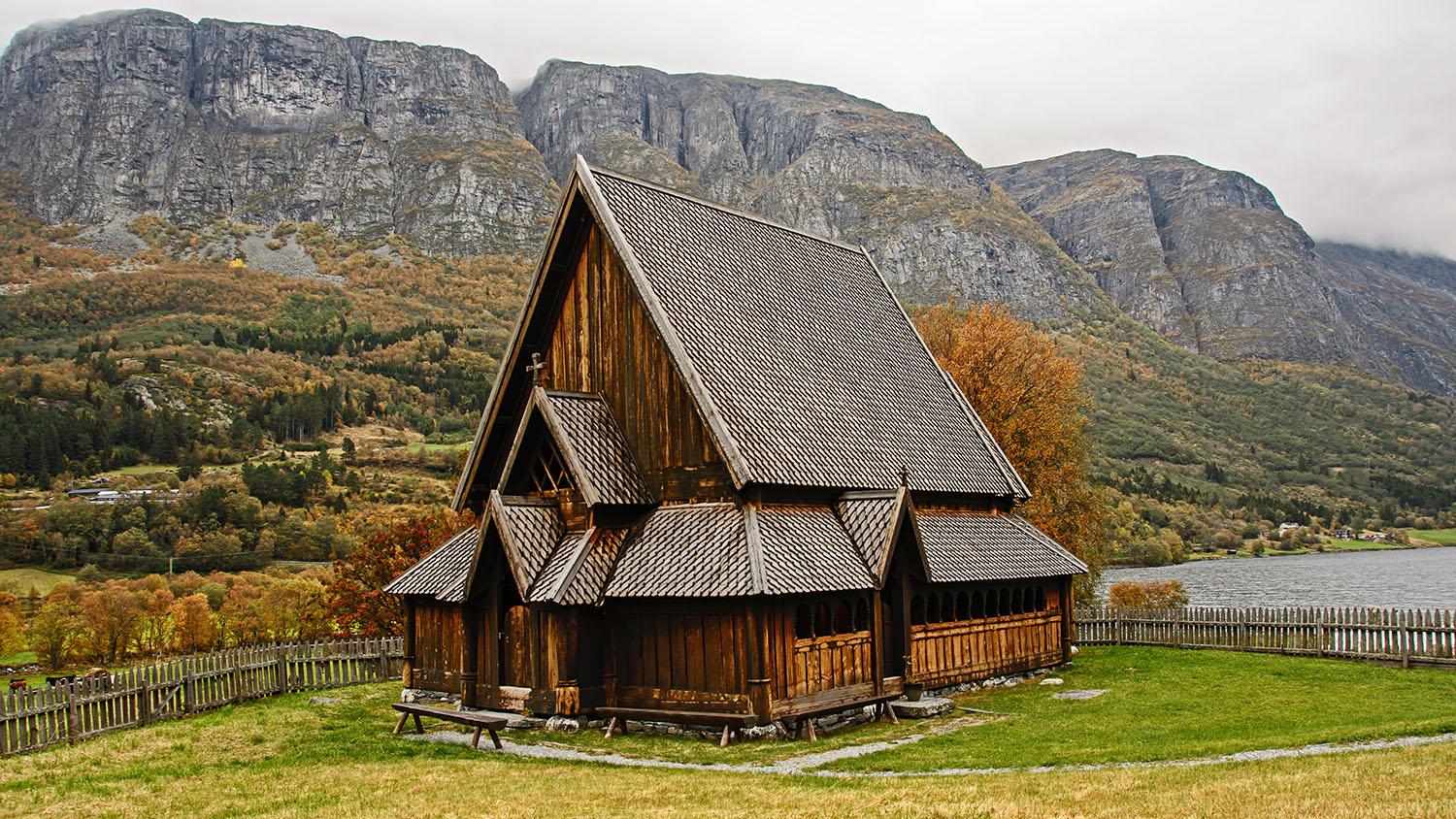 Øye
ØyeØye Stave Church
Øye Stave Church was probably built towards the end of the 1100s. Its original location was in the fields facing Vangsmjøsa. This was an extremely wet area, and during the spring flooding the graves were often filled with water and stones had to be added to the coffins in order to lower them down. The church was in a poor state of repair, and it either rotted away or was taken by the wind. 1747 saw the consecration of the new Øye Church. The stave church disappeared. In the 1930s, work had to be done on the foundations of new Øye Church. Under the church floor, Øye Stave Church was found - 156 pieces in total. No one knows why it was stored here. It was in the end decided to erect the stave church, and it was consecrated in 1965. Today Øye Stave Church is used for weddings and Midsummer Mass only. The church has a strong Catholic medieval character with a narrow opening to the choir and pews along the walls only. It features copies of two medieval portals (probably from the 1100s) with capitals and numerous animal decorations. The door has a medieval ring handle. On the altar stands a crucifix dating back to the 1200s, featuring a Christ-figure from the 1300s. The wooden baptismal font from the 1300s is quite unique, and one of the pews in the choir may be from the Middle Ages. In May 2023 a small exhibition about the stave church was opened just across the road from the church. It is accessible during the church's opening hours, and shows a rune stone, a cencer from the old stave church, a sword and a weaving spoon from the Viking age, as well as an axe head from Helin. There is also information about our one thousand year old church history.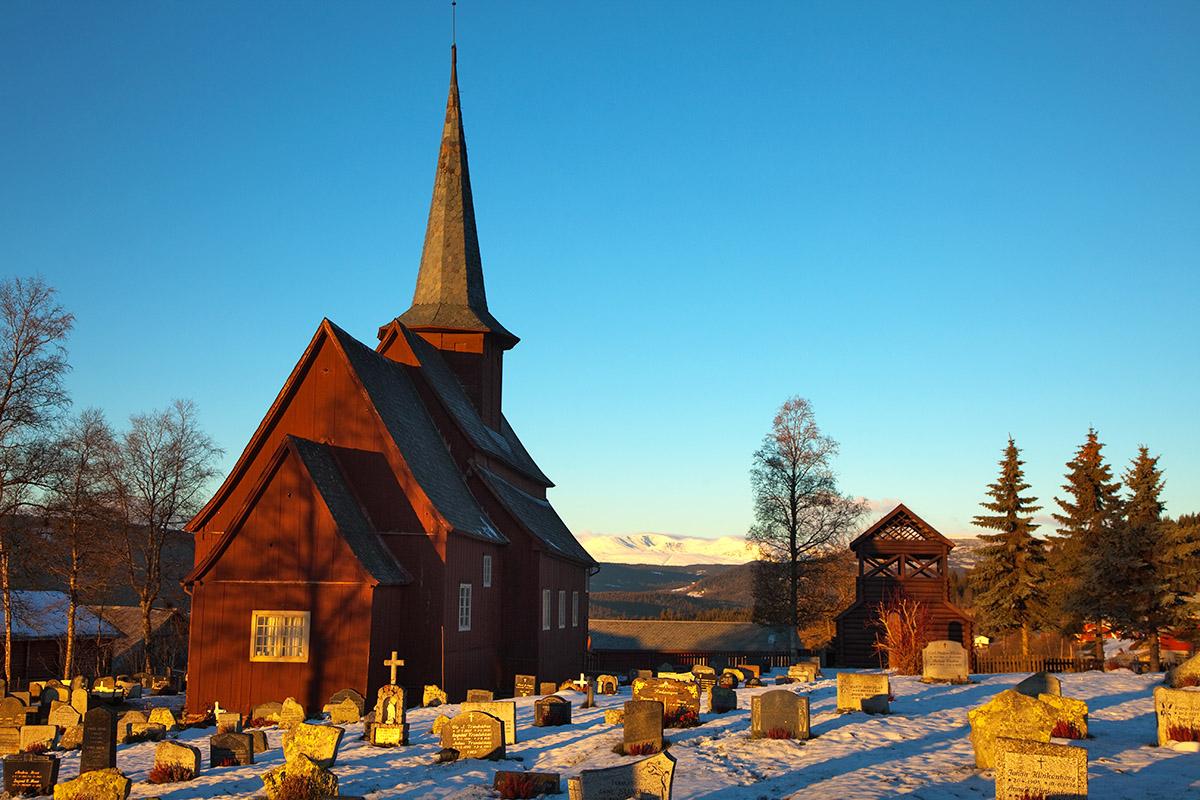 Heggenes
Hegge Stave Church
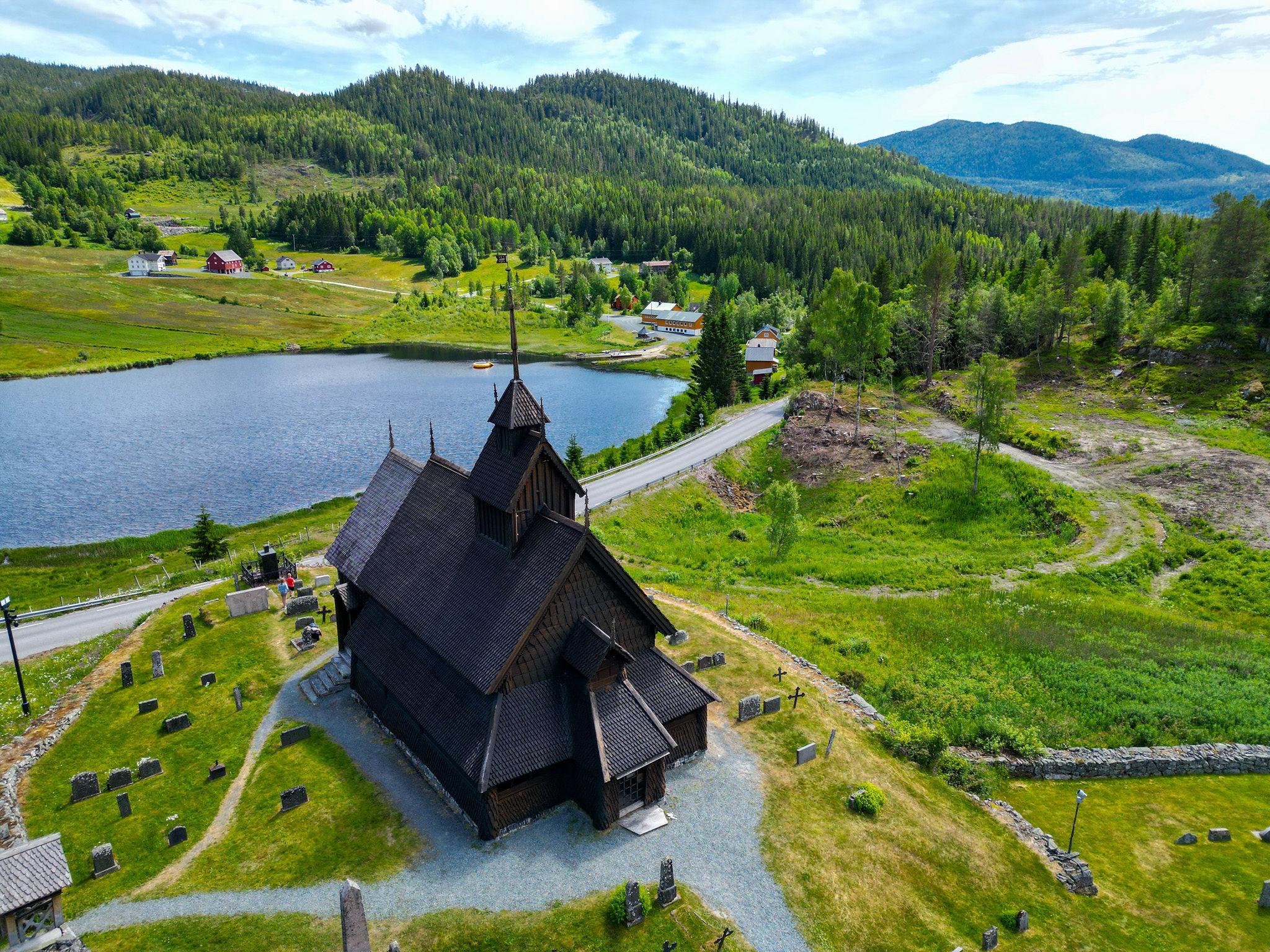
The Hegge stave church dates back to 1216 and celebrated its 800th anniversary in 2016. The church is still in use as a parish church in the local community. It has a carved gate from the Middle Ages and inside the church you can see the original staves with carved face masks. One of the staves has a runic inscription. The baptismal fountain made of soapstone is from the 1100s and the altarpiece has a unique history which you can read further down. The alterpiece, dating back to 1782, has its own special history. Four men from Hegge were in Gudbrandsdalen to trade livestock, but in the mountains they got caught up in a storm. They promised God that if they were to return home alive, each of them would donate the value of a cow to Hegge Church. They kept their promise, ordered and paid for the altarpiece in Gudbrandsdalen and brought it home on a sledge. Admission: free Guiding for groups can be booked at Øystre Slidre kyrkjekontor, Tel. (+47) 61 35 25 78 or email [email protected]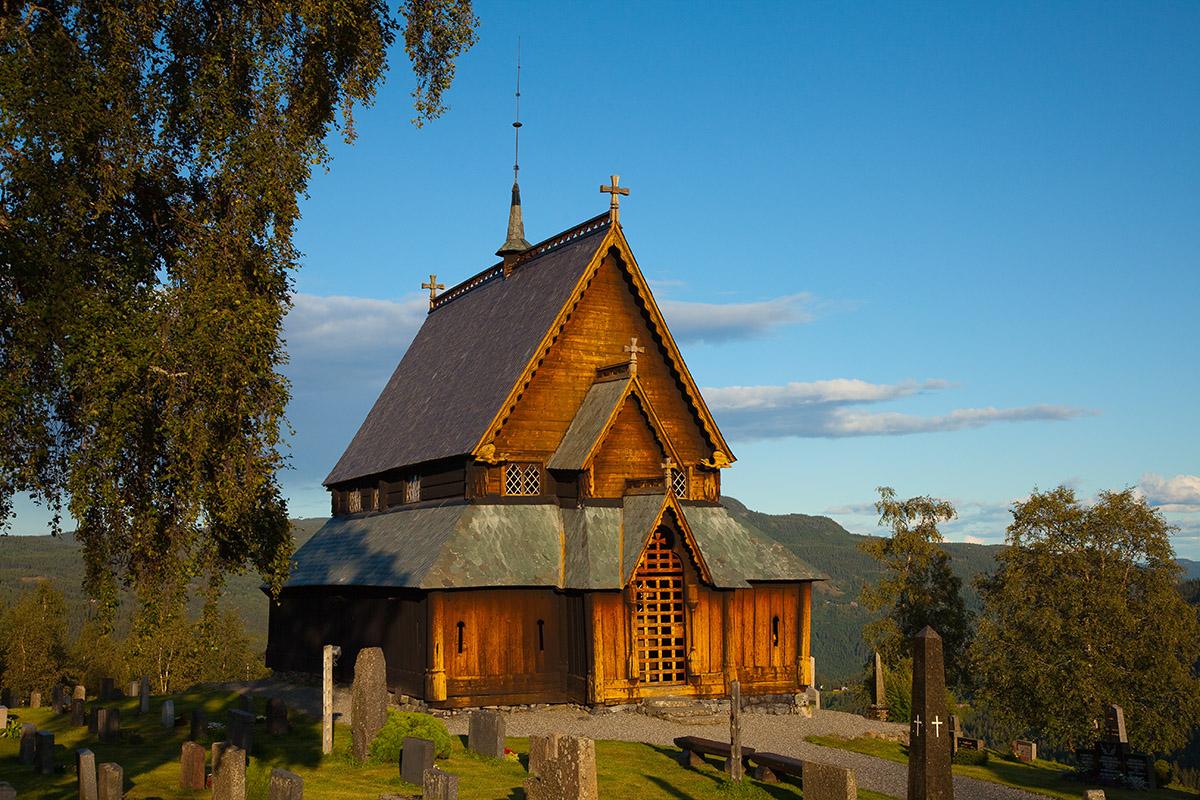 Reinli
Reinli Stave Church
Reinli Stave Church dates back to around 1326. Prior to this, the site has been home to two other churches. The only remains left of the first church are graves, and the second must have burnt down or been demolished. Reinli Stave Church is a parish church, but is only used during summer. For the rest of the year, the chapel further down the road is used. Reinli Stave Church still has 12 medieval consecration crosses. These have been painted black, and are believed to date back to around 1326. Reinli stave church is the only one in Norway with all consecration crosses intact. The altarpiece is a medieval triptych, but it was painted in the 1890s and 1920s. A crucifix hangs on the choir wall. Fittings in wrought iron, the soapstone font and a bell in the belfry are all from the Middle Ages. The wall features a hatch for the leprous, which was used to let them confess and receive Holy Communion. Admission (incl. guiding) Adults NOK 90,- Children 6-16 years NOK 50,- Family NOK 250,- Groups NOK 70,- per person (minimum 10 people) No student or senior discounts. Visits out of hours on request, minimum charge NOK 500,- Please note that we cannot accept foreign currencies, i.e. Euro.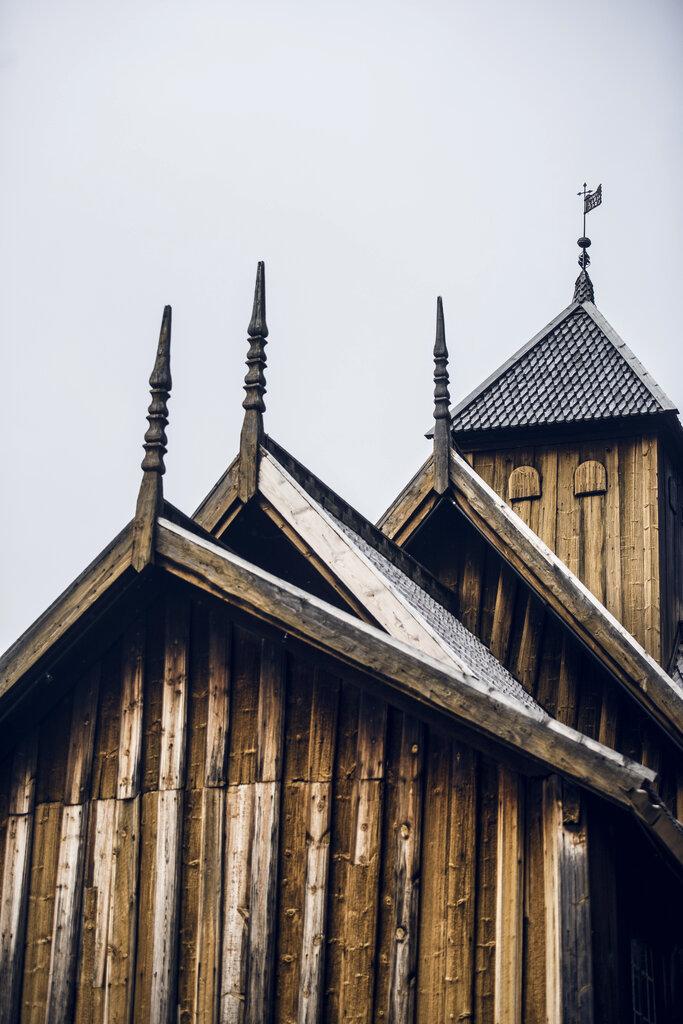 Uvdal
UvdalUvdal Stave Church
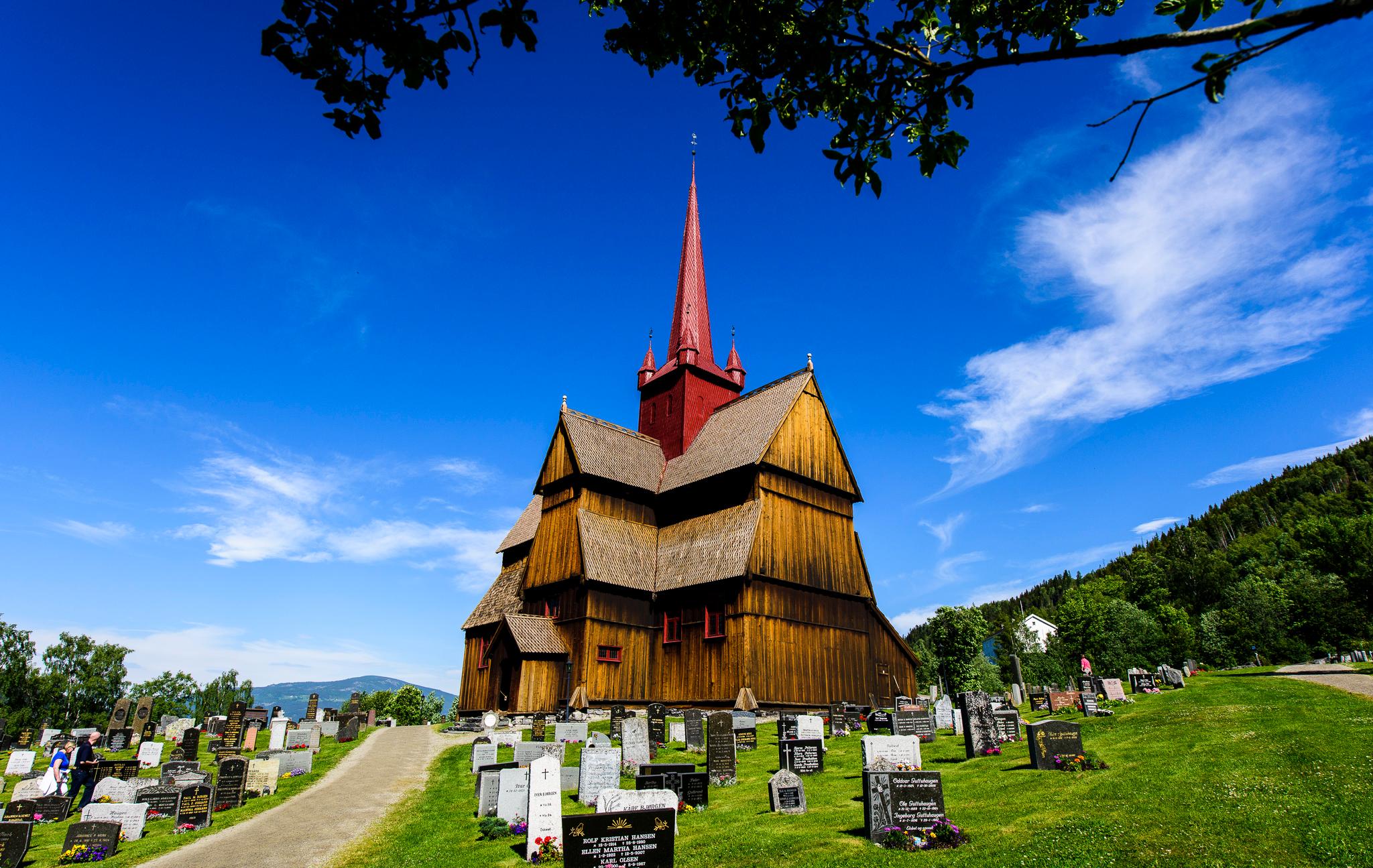
Uvdal Stave Church, as it stands today, does not have its original appearance but is a result of steady expansion and modifications until the 1800s. Each century has added something to it, and so the Church has become a beautiful and quaint example of how building style and decoration from several periods may merge into a rich and harmonious whole. In 1978, excavations were conducted in Uvdal Stave Church. One found among other items over 500 coins beneath the floor. From these we can conclude that the church was probably built at the end of the 12th century. Another interesting discovery was distinct holes in the ground made by pillars from an even older building, that also probably being a church. In one of these holes were two coins from the beginning of the same century, which may indicate the age of the first church. We do not know how this church might have looked or indeed its size. Facilities: Church Distance: 7.4 km. Location: Rødberg Time: 7 min. / car
Stories from Setesdal
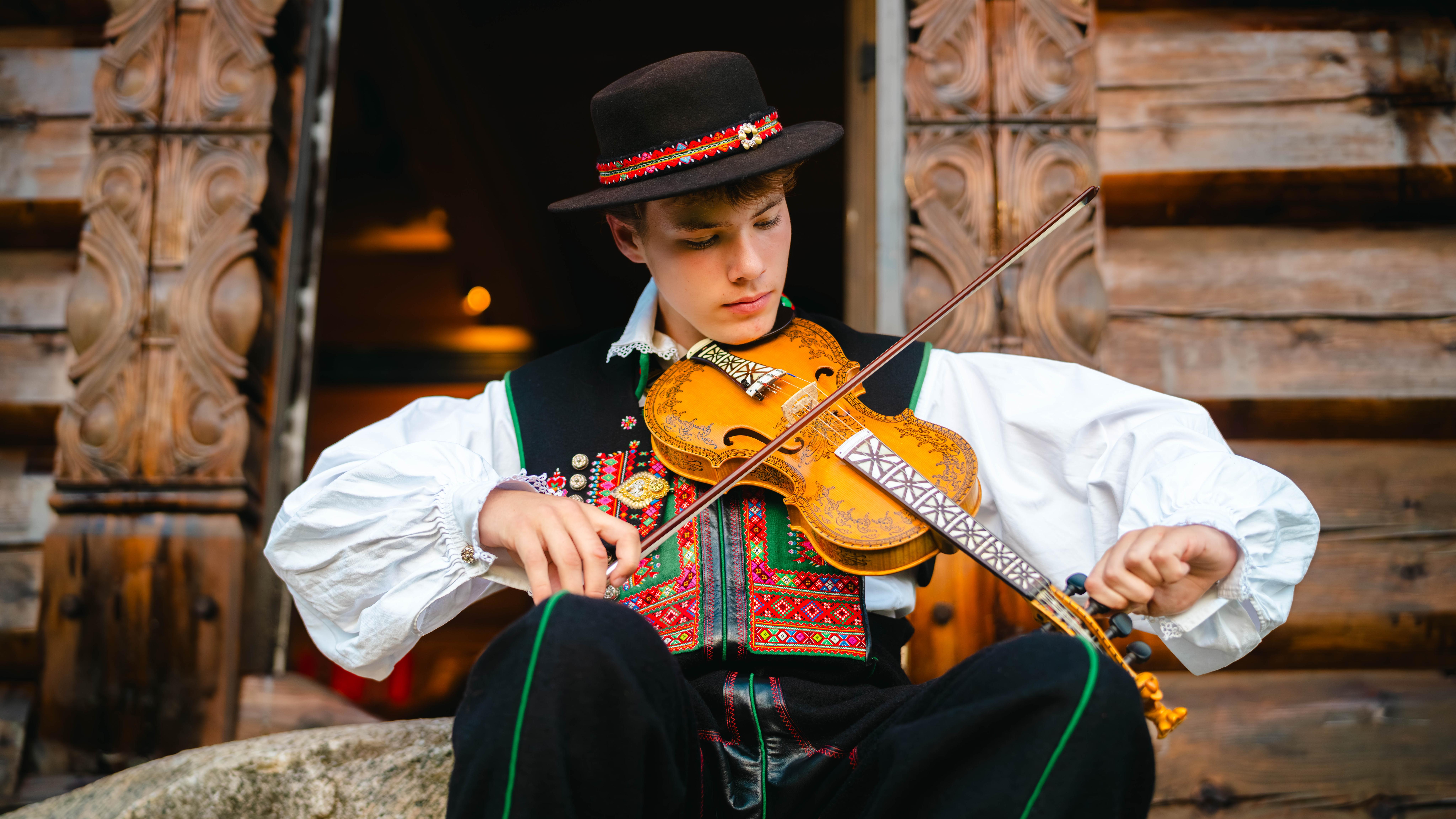
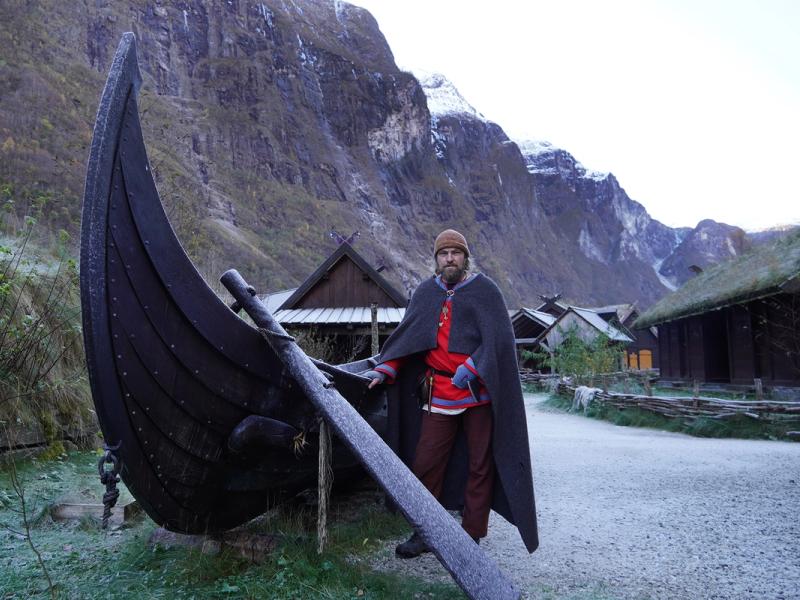
Discover the unique folk music of Setesdal in Southern Norway, recognized by UNESCO as Intangible Cultural Heritage.






Take advantage of top offers
See our selection of trusted companies that work hard to make you happy all through your trip.
 CityboxModern and affordable hotels in central locations in Oslo, Bergen, and Kristiansand.
 Go FjordsBook fantastic tours and experiences! We offer tours in Oslo, Bergen, Stavanger, Lofoten, the North Cape, and more.
 My Nordic TravelChoose between DIY itineraries and pre-packaged holidays to the very best destinations in Norway.
 Up NorwayBespoke luxury hand-picked by local experts. We combine your preferences and our knowledge to make an unforgettable journey.
 Norwegian HolidaysLow-price package holidays with Norwegian. Book your flight, hotel, and rental car all in one place.
 Fjord Travel NorwaySleep in an ice hotel, hunt the northern lights, and discover the magical fjords. Book your tour now!
 Thon Hotels ASFantastic breakfast included! Experience true comfort and reasonable rates at our 80 hotels in Norway.
 Norrøna AdventureGet ready for expeditions and adventure holidays with Norrøna Adventure. Hiking, skiing, and biking trips.
 Vy TrainGlide through scenery on a train between Oslo and Bergen on the Bergen Railway and explore the greater Oslo region.
 Benzini CampersThe adventure of your life starts here. Book a campervan with Benzini Campers now.
 NorgesbookingBook your perfect cabin stay in the fjords, mountains, and valleys of Norway.
 NOR-WAY BussekspressEnjoy scenic views on comfortable bus trips to the fjords and from city to city with our express buses.
 Rent-A-Wreck of Scandinavia ASThe smart and affordable car rental alternative.
 Arctic Campers ASDo you want to try van life? Explore Norway in comfort and style with our smart and cosy campervans.
 Fjord ToursHome of Norway in a Nutshell, Norway's most popular tour. Fjords, mountains, and stunning destinations — all in one trip!
 CampioNorway's biggest camping booking site. Find the best camping and motorhome pitches throughout Norway.
 Scandic HotelsExperience Nordic hotel hospitality at its finest at more than 90 hotels across Norway. Special offers are available.
 CampcationBook a camping stay in stunning and unique locations all across Norway with Campcation.
 Classic Norway HotelsWhen the hotel is the destination. Book a night to remember in one of Norway's most unique and distinctive hotels.
 CampanyonUnique camping in nature. Book a stay in a treehouse or glamping tent or rent a motorhome pitch.
 Brim ExplorerQuiet fjord tours on award-winning electric catamarans in Oslo, Tromsø, Lofoten, and Svalbard.
 Radisson HotelsGreat value offers and comfortable quality stays in Norway´s major cities, airports, and ski resorts.
 De HistoriskeHave an unforgettable stay at one of Norway's unique, authentic historic hotels. Enjoy first-class dining experiences and a broad range of activities.
 Authentic ScandinaviaTravel curated by locals. Our tailormade tours suit every type of traveller and budget.
 HurtigrutenExperience the world's most beautiful sea voyage on an unforgettable cruise along the stunning Norwegian coast.
 StrömmaSightseeing by bus and boat in several major tourist spots and cities in Norway.
 Auto EuropeAlways a smooth car rental experience. Search and compare rental rates. Free cancellation up to 24 hours prior to pick-up.
 StrawberryA different hotel company! Look out for great weekend deals at more than 100 hotels in Norway.
 Discover NorwayOffers a range of exciting self-guided hiking, biking, and skiing holidays in Norway. Luggage transfer included.
 50 Degrees North NordicChoose between unforgettable tailormade individual trips and small, exclusive group tours of Norway.
 Booknordics.comUnique holiday packages, adventure hotels, tours, and activities.
 NorwegianNorwegian offers cheap flights in Norway and direct flights from more than 70 European destinations. Book flights through our low fare calendar to your destinations.
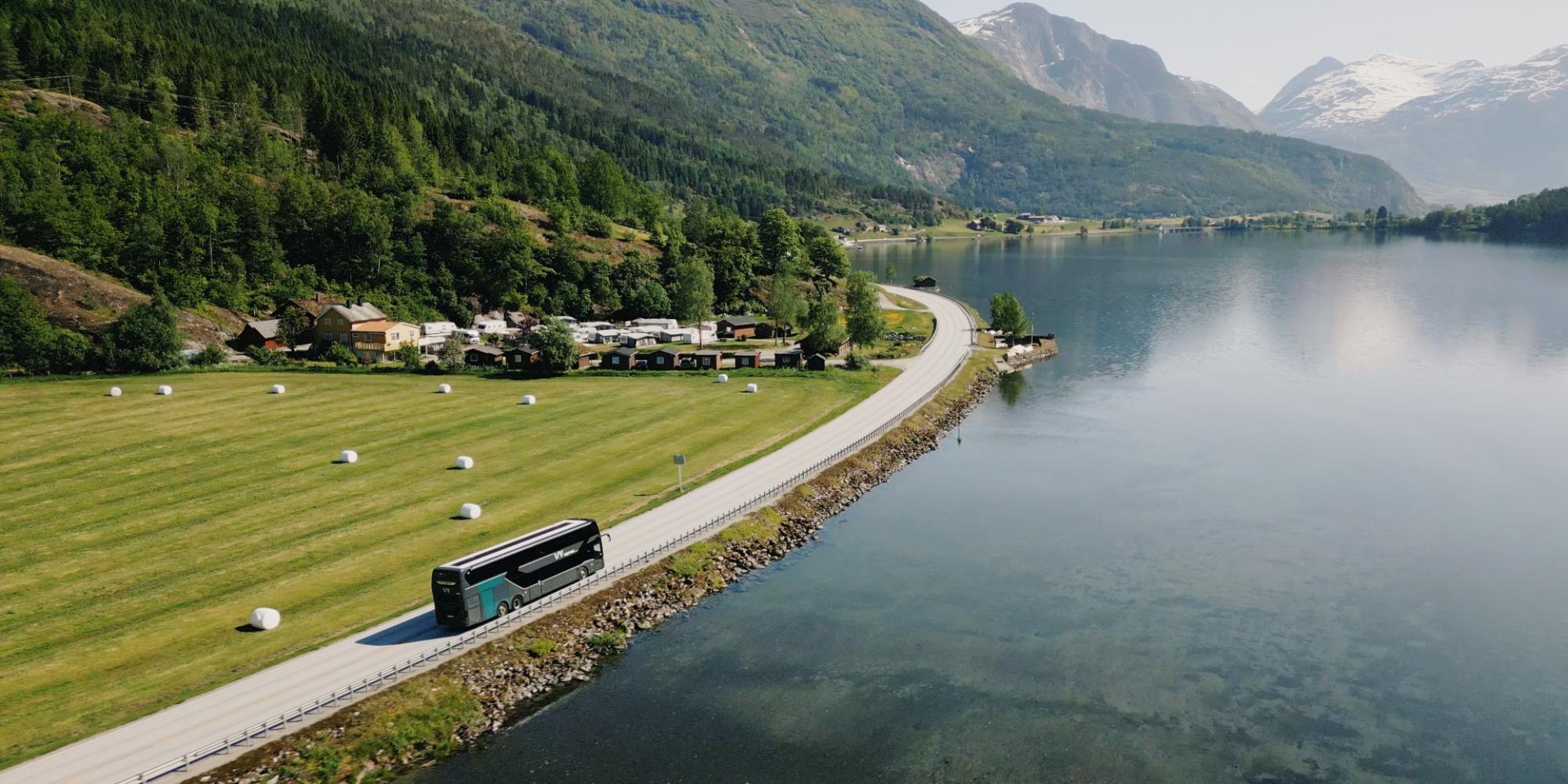 Vy expressDiscover Norway on comfortable express buses that take you between major cities, mountains, and fjords.
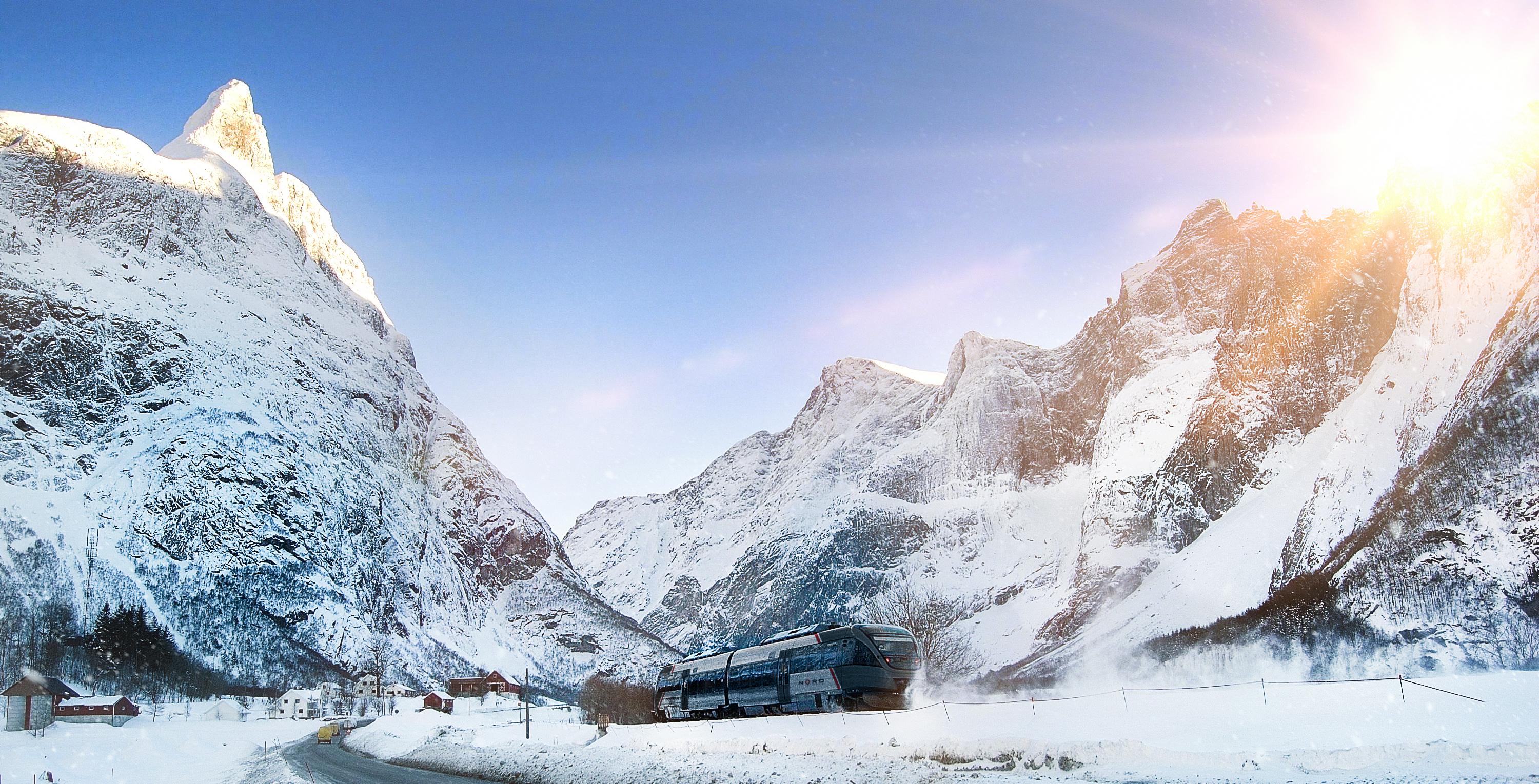 SJ NordSJ NORD - the adventure starts on the train